
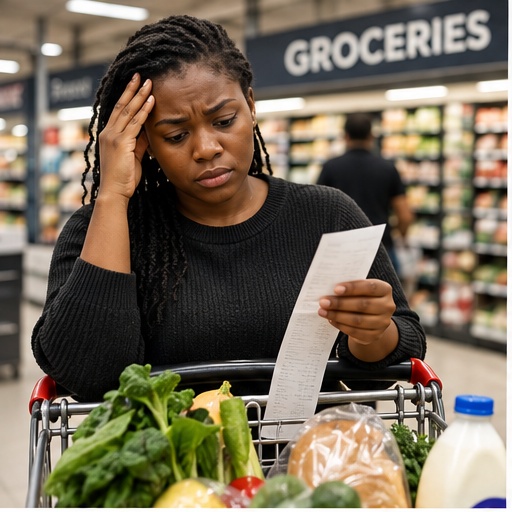
Why Is Food So Expensive in South Africa? What’s Really Driving Grocery Prices
Why is food so expensive in South Africa? The biggest reason is that the price you pay at the supermarket reflects far more than the cost of producing the food itself. Farmers, processors, packaging companies, transporters, wholesalers and retailers all face costs involving fuel, electricity, labour, fertiliser, animal feed, logistics and other inputs. Weather, disease outbreaks, global commodity prices and the rand can add further pressure. Even when some of those costs fall, supermarket prices do not necessarily fall immediately.
There is also an important twist in 2026: food inflation has recently slowed sharply, but that does not mean groceries have returned to their old prices. Statistics South Africa reported that annual food and non-alcoholic beverage inflation fell to just 0.9% in July 2026, its lowest rate in more than 16 years. (Statistics South Africa)
That sounds like food has suddenly become cheap.
It hasn’t.
A lower inflation rate means prices are rising much more slowly overall than they were a year earlier. It does not mean the large price increases accumulated over previous years have disappeared.
That distinction explains why many South Africans can hear that “food inflation is down” while still looking at their grocery bill and asking:
Why does everything still feel so expensive?
This article answers that question.
Table of Contents
Why Is Food So Expensive in South Africa? The Short Answer
Several pressures ultimately meet at the supermarket shelf:
| Factor | How it can affect food prices |
|---|---|
| Fuel | Raises farming, manufacturing and transport costs |
| Electricity | Affects processing, refrigeration and retail |
| Weather | Can reduce agricultural production |
| Fertiliser | Raises crop-production costs |
| Animal feed | Affects poultry, eggs, dairy and meat |
| Rand exchange rate | Influences imported inputs and products |
| Global commodity prices | Affect grains, oil, fuel and fertiliser |
| Logistics | Adds costs between farm and supermarket |
| Packaging | Adds to manufacturing costs |
| Labour | Part of costs throughout the supply chain |
| Disease outbreaks | Can reduce livestock or poultry supply |
| Retail and producer pricing | Determines how costs are passed to consumers |
| Competition | Can influence how quickly falling costs reach shoppers |
Not every factor pushes prices up simultaneously.
And not every food item responds in exactly the same way.
That is why the price of maize meal might fall while fish becomes more expensive in the same month.
First, Is Food Actually Becoming More Expensive in South Africa?
This needs a careful answer.
Compared with several years ago, many grocery prices are substantially higher. But right now, food inflation has slowed dramatically.
According to Stats SA’s latest available CPI data, annual food and non-alcoholic beverage inflation dropped to 0.9% in July 2026.
That was down from higher levels earlier in the year and represented the lowest annual rate since June 2010. (Statistics South Africa)
Some important food prices were actually falling.
Stats SA reported that in July 2026:
- cereal products recorded annual deflation of 2.0%;
- maize meal fell 3.1% month-on-month;
- white bread fell 0.6% month-on-month;
- annual meat inflation slowed to 1.5%;
- stewing beef was 7.9% cheaper than a year earlier;
- beef steak was 6.1% cheaper; and
- beef mince was 5.8% cheaper. (Statistics South Africa)
But not everything became cheaper.
Several processed meat products increased, while categories including fruit and nuts, fish and seafood, vegetables, oils and fats, beverages, and dairy and eggs recorded higher annual inflation rates. (Statistics South Africa)
So the accurate headline is not:
“South African food prices are exploding in 2026.”
It is:
Food inflation has eased considerably, but households are still living with the higher price level created by years of previous increases—and some individual foods continue to become more expensive.
That difference matters.
Why Does Food Still Feel Expensive When Inflation Is Falling?
This is probably the most important part of the entire article.
Imagine a loaf of bread costs:
R15
It rises by 10%:
R16.50
The following year, it rises by only 2%:
R16.83
Inflation has fallen dramatically—from 10% to 2%.
But the bread didn’t return to R15.
It became even more expensive, just at a slower rate.
That is broadly why falling food inflation does not necessarily feel like falling grocery bills.
To bring the price back down, you need deflation in that particular product—not merely lower inflation.
South Africans have already absorbed years of price increases.
When the rate of increase finally slows, the household budget doesn’t automatically reset.
Why Have Food Prices Increased So Much Over the Years?
There wasn’t one single cause.
South Africa experienced overlapping pressures involving:
- global food prices;
- the COVID-era supply disruption;
- Russia’s invasion of Ukraine and commodity disruption;
- high fuel prices;
- electricity disruptions;
- agricultural input costs;
- drought;
- logistics problems;
- animal disease;
- currency movements; and
- domestic cost increases.
Those shocks entered different parts of the food supply chain at different times.
Some disappeared quickly.
Others persisted.
And consumers experienced the combined result at supermarket tills.
How Does Fuel Make Food More Expensive?
Food moves.
A lot.
Consider a basic packet of vegetables.
Before reaching your supermarket, the product may need to travel:
farm → packhouse → distribution centre → supermarket → consumer
Fuel is involved in agricultural machinery, transport and distribution.
Diesel is especially important in agriculture and freight.
If fuel becomes more expensive, businesses throughout the food chain can face higher costs.
The South African Reserve Bank highlighted fuel as an important inflationary pressure during 2026 and also noted that agricultural producers were facing higher diesel and fertiliser costs. (South African Reserve Bank)
This is why a fuel-price shock can eventually reach someone who doesn’t even own a car.
You may not buy petrol.
But the truck delivering your food uses fuel.
Are Fuel Prices Still Making Food More Expensive in 2026?
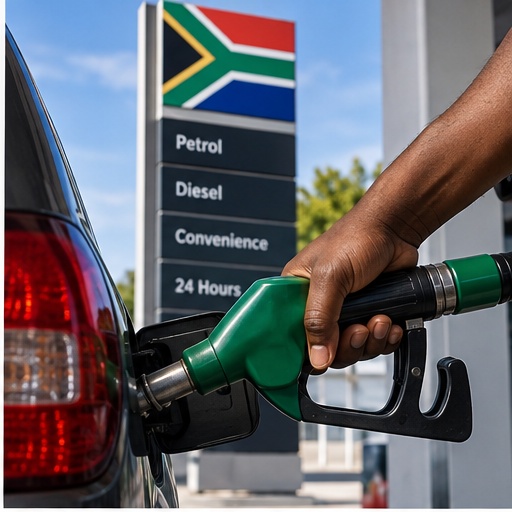
The situation has changed significantly during the year.
Fuel contributed heavily to inflation pressure earlier in 2026. But prices retreated sharply in July.
Stats SA reported that between June and July:
- petrol prices decreased by 7.1%;
- diesel decreased by 11.7%; and
- annual fuel inflation slowed from 34.3% to 20.6%. (Statistics South Africa)
Even after that monthly decline, however, petrol remained 19.3% more expensive than a year earlier, while diesel was 28.8% more expensive. (Statistics South Africa)
This demonstrates how volatile input costs can be.
Lower fuel prices can eventually relieve pressure on food supply chains, but that doesn’t guarantee an immediate rand-for-rand supermarket price cut.
How Does Electricity Affect Food Prices?
Electricity is involved at almost every stage of modern food production.
Consider what businesses need electricity for:
- irrigation;
- processing;
- milling;
- refrigeration;
- freezing;
- cold storage;
- bakeries;
- factories;
- warehouses;
- lighting;
- supermarket refrigeration; and
- point-of-sale systems.
When electricity becomes more expensive, businesses may face higher operating costs.
Stats SA reported that municipal electricity tariffs increased by 8.1% in 2026, although that was lower than the 10.4% increase recorded in 2025. (Statistics South Africa)
During severe load-shedding periods in earlier years, food businesses also had to invest in alternatives such as generators, diesel, batteries and solar systems.
The Competition Commission previously identified load-shedding and logistics disruptions as pressures throughout food value chains. (Competition Commission)
Those costs don’t necessarily disappear immediately simply because electricity supply becomes more reliable.
Businesses may still need to recover investment and operating costs.
How Does the Rand Affect Grocery Prices?
South Africa produces enormous quantities of food domestically.
But agriculture and food manufacturing still interact with international markets.
Businesses can be exposed to imported or globally priced:
- fuel;
- fertiliser;
- machinery;
- chemicals;
- packaging materials;
- agricultural inputs;
- animal feed components; and
- certain food products.
When the rand weakens substantially against major currencies, imported goods and inputs can become more expensive in rand terms.
A stronger rand can have the opposite effect.
The Reserve Bank noted in July 2026 that the rand had remained relatively resilient, helping contain import prices. (South African Reserve Bank)
That is one reason currency movements matter even when the product you’re buying says Produced in South Africa.
Locally produced does not necessarily mean every input used to produce it is locally priced.
Why Does Fertiliser Matter to Food Prices?
Farmers need inputs to grow crops.
Fertiliser is one of them.
When fertiliser becomes significantly more expensive, producing crops can become more expensive.
That can ultimately affect products including:
- maize;
- wheat;
- vegetables;
- fruit;
- animal feed; and
- foods made from those crops.
The Reserve Bank specifically highlighted renewed agricultural cost pressures from diesel and fertiliser in its May 2026 assessment. (South African Reserve Bank)
Farmers cannot always simply absorb large increases indefinitely.
Some costs eventually move through the value chain.
How Does Weather Affect Food Prices?
Agriculture depends on weather.
Too little rain can reduce crops.
Too much rain can damage them.
Extreme heat can reduce yields.
Floods can disrupt farms and transport.
Drought can reduce supply and increase production pressure.
South Africa’s maize industry provides a useful example.
The Competition Commission reported that 2024 was difficult for maize farmers because dry conditions hit at a crucial stage of the growing season. Those supply challenges subsequently began feeding into maize-meal producer and retail prices. (Competition Commission)
The relationship is straightforward:
Poor harvest → lower supply → upward price pressure
But weather effects can also work in the other direction.
The Reserve Bank noted in July 2026 that good harvests were contributing to easing food inflation. (South African Reserve Bank)
This is why food inflation can change relatively quickly when agricultural conditions improve.
Why Is Meat Expensive in South Africa?
Meat prices are affected by a combination of:
- animal feed;
- fuel;
- electricity;
- veterinary costs;
- disease;
- transport;
- slaughtering;
- processing;
- refrigeration; and
- supply and demand.
Animal disease can be particularly disruptive.
For example, South Africa has experienced outbreaks affecting livestock and poultry in recent years.
The Reserve Bank said in July 2026 that fading effects from foot-and-mouth disease were one factor helping food inflation slow. (South African Reserve Bank)
The Competition Commission has also previously documented the impact of avian influenza on poultry supply and egg prices. (Competition Commission)
When disease reduces supply, prices can rise even when other economic conditions are improving.
Why Are Eggs Sometimes Suddenly Expensive?
Eggs demonstrate how a relatively ordinary product can be hit by a specific supply shock.
The highly pathogenic avian influenza outbreak that affected South Africa’s poultry sector disrupted supply and contributed to significant egg-price pressure.
The Competition Commission specifically noted the effect the outbreak had on retail egg prices. (Competition Commission)
Eggs also depend on:
- chicken feed;
- electricity;
- transport;
- packaging;
- labour; and
- farm operating costs.
This is why analysing food prices only through general inflation can hide important product-specific problems.
Why Is Maize Meal Expensive?
Maize is one of South Africa’s most important staples.
Its price can be influenced by:
- harvest size;
- rainfall;
- international maize prices;
- export demand;
- fertiliser;
- fuel;
- milling;
- transport; and
- retail pricing.
Dry conditions during 2024 put upward pressure on the maize value chain. (Competition Commission)
More recently, however, conditions improved.
By July 2026, Stats SA recorded monthly price declines for maize meal, while the Reserve Bank pointed to better harvests as one reason food inflation had eased. (Statistics South Africa)
This illustrates an important point:
Food prices aren’t permanently moving in one direction.
Agricultural cycles matter.
Why Don’t Supermarket Prices Fall Immediately When Farm Prices Fall?
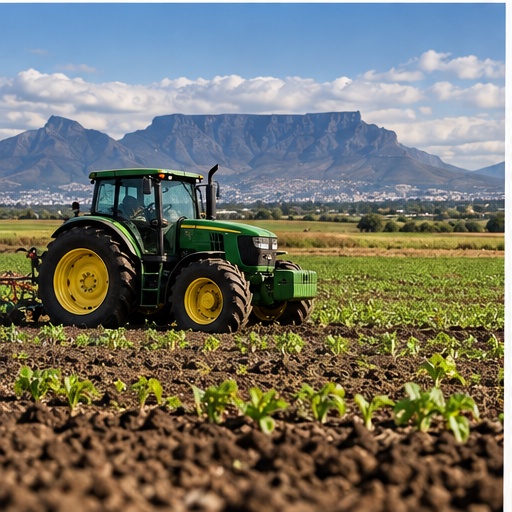
This is where the food-price debate becomes more complicated.
Suppose the commodity price of a particular crop falls.
Consumers may understandably ask:
“Why hasn’t the supermarket price fallen?”
There can be legitimate reasons for a delay.
Retail food prices incorporate much more than the raw agricultural commodity.
There are also:
- processing costs;
- packaging;
- transport;
- labour;
- electricity;
- warehousing;
- refrigeration;
- rent;
- financing;
- spoilage; and
- retail operating costs.
Businesses may also have bought inventory when costs were higher.
However, that doesn’t mean every delay should simply be accepted without scrutiny.
The Competition Commission’s March 2026 Cost of Living Report found evidence of downward price stickiness in some essential food value chains. It highlighted eggs, frozen chicken, sunflower oil and maize meal as areas where retail prices remained elevated or increased despite stable or declining upstream costs. (Competition Commission)
That is an important finding.
Are South African Supermarkets Responsible for High Food Prices?
The evidence does not support reducing the entire food-price problem to:
“Supermarkets are greedy.”
But neither should pricing behaviour be ignored.
The food supply chain contains many participants:
farmer → processor → manufacturer → distributor → wholesaler → retailer
Different participants have different margins and costs.
The Competition Commission monitors essential food value chains precisely because it wants to understand whether changes in upstream costs are passed through to consumers appropriately. (Competition Commission)
Its March 2026 assessment found a mixed picture.
Some products showed relatively proportionate cost pass-through or margin compression.
Others showed persistent price stickiness. (Competition Commission)
So the evidence-based answer is:
Retailers are one part of the pricing chain, and competition and margins deserve scrutiny, but supermarkets are not the only reason food is expensive.
Why Do Prices Rise Quickly but Fall Slowly?
Consumers often notice something frustrating:
When costs rise, prices seem to increase quickly.
When costs fall, prices can appear to take much longer to come down.
Economists sometimes describe this as asymmetric price transmission or downward price stickiness.
There can be several explanations.
Businesses may:
- still hold expensive inventory;
- have contracts signed at higher prices;
- face other costs that haven’t fallen;
- rebuild margins after periods of compression; or
- simply not face enough competitive pressure to reduce prices immediately.
The Competition Commission’s food monitoring programme specifically looks at how changes in costs move through different stages of the food value chain. (Competition Commission)
For consumers, the important point is:
Lower farm or commodity prices do not guarantee immediate lower supermarket prices.
Does Competition Affect Food Prices?
Potentially, yes.
Competition matters because businesses facing strong rivals have more pressure to:
- lower prices;
- run promotions;
- improve efficiency;
- compete for customers; and
- pass cost reductions through.
When competition is weak, that pressure can be reduced.
This is why the Competition Commission monitors pricing and margins in essential food categories rather than assuming every price movement is purely the result of agricultural costs.
But competition is only one factor.
A highly competitive retailer still cannot sell indefinitely below the cost required to source and operate.
Why Does Healthy Food Feel So Expensive?
This is another common concern.
Fresh foods can have additional challenges.
Fruit and vegetables can be:
- seasonal;
- perishable;
- vulnerable to weather;
- expensive to refrigerate;
- easily damaged;
- subject to transport losses; and
- affected by harvest conditions.
A packet of dry rice can remain on a shelf for a long time.
Fresh berries cannot.
Perishability creates costs and waste risk.
This does not mean every healthy food is expensive.
South Africans can still compare lower-cost nutritious staples such as beans, lentils, seasonal vegetables, eggs and other foods depending on current prices.
But fresh food supply chains can be more sensitive to disruptions than long-life packaged products.
Why Are Prices Different Between Supermarkets?
Supermarkets don’t all have identical:
- suppliers;
- logistics networks;
- rent;
- store sizes;
- locations;
- customer bases;
- promotions;
- buying power; or
- pricing strategies.
Even branches of the same retailer can sometimes have different product availability and promotional circumstances.
This is why comparing grocery prices can still save money.
A product being cheaper at one supermarket this week does not mean that retailer is always cheapest across your entire basket.
Compare basket cost, not one promotional item.
Why Is Food More Expensive in Some Areas?
Location affects distribution and operating costs.
A retailer in an area far from major distribution centres may face different logistics from a large urban supermarket.
Other factors can include:
- store competition;
- local rent;
- transport distance;
- store format;
- customer demand;
- security;
- delivery frequency; and
- supply availability.
This can create frustrating situations where lower-income consumers don’t necessarily have access to the lowest prices.
Someone without a car may also be unable to travel to three supermarkets just to save R5 on individual products.
So access matters alongside price.
Does Load-Shedding Still Affect Food Prices?
The extreme load-shedding pressures of earlier years have eased, but the costs created by electricity disruption don’t necessarily vanish immediately.
Businesses invested in:
- generators;
- diesel;
- solar;
- batteries;
- inverters;
- alternative refrigeration; and
- backup infrastructure.
The Competition Commission previously identified load-shedding as a factor increasing costs across food value chains. (Competition Commission)
Even as electricity reliability improves, businesses still maintain and finance some of this equipment.
At the same time, electricity tariffs continue to increase.
Stats SA recorded an 8.1% municipal electricity tariff increase in 2026. (Statistics South Africa)
Are Food Prices Going to Come Down?
Some already have.
That is the most important correction to the idea that grocery prices only rise.
Stats SA’s July 2026 figures showed price declines in several important categories and individual products. (Statistics South Africa)
But expecting the entire supermarket basket to return to 2019 or 2020 prices is unrealistic.
What consumers are more likely to see is a mixture:
- some products fall;
- some remain stable;
- some rise slowly;
- others experience temporary sharp increases.
Agricultural conditions, fuel, currency movements and global markets will continue influencing the direction.
The Reserve Bank noted in July that good harvests and easing disease effects had helped food inflation slow, while also warning that inflation risks remained uncertain. (South African Reserve Bank)
Why Doesn’t Lower Inflation Mean Lower Prices?
Because inflation measures the rate of price change.
This is worth repeating.
If your grocery basket goes from:
R1,000 → R1,100
that is a 10% increase.
If it then goes:
R1,100 → R1,111
the increase is only 1%.
Inflation has collapsed from 10% to 1%.
But your groceries are still more expensive than they were before.
For prices to return to R1,000, the overall price level would have to fall.
That is why people can simultaneously experience:
low food inflation
and
expensive groceries.
Both statements can be true.
Which South African Households Are Hit Hardest by High Food Prices?
Low-income households generally feel food-price increases more severely because necessities consume a larger proportion of their income.
Imagine two households.
Household A
Monthly income: R6,000
Food: R2,000
Food consumes:
33% of income
Household B
Monthly income: R40,000
Food: R6,000
Food consumes:
15% of income
If grocery prices increase substantially, Household A has far less room to absorb the increase.
They may have to cut:
- protein;
- transport;
- electricity;
- clothing;
- savings; or
- other essentials.
The Competition Commission specifically says its cost-of-living monitoring is intended to understand affordability pressures, particularly for low-income households. (Competition Commission)
This is why food inflation isn’t merely an economic statistic.
It affects what families can actually put on the table.
Why Can Official Inflation Feel Different From Your Grocery Bill?
Because your personal shopping basket isn’t necessarily identical to the basket used to measure national inflation.
Suppose you buy large quantities of:
- chicken;
- maize meal;
- eggs;
- milk; and
- cooking oil.
If those particular products rise sharply, your personal food inflation can feel severe even when average food inflation is moderate.
Another household may buy a very different mix.
Inflation statistics describe broad price movements.
They do not claim that every South African household experiences the exact same percentage increase.
Is Food More Expensive Because South Africa Exports Food?
Exports are part of agricultural markets, but the issue is more complicated than saying:
“South Africa exports food, therefore local food is expensive.”
Farmers and agricultural businesses operate in markets where domestic and international supply, demand and prices interact.
Exports can support:
- agricultural employment;
- farm income;
- investment;
- foreign exchange; and
- industry growth.
At the same time, international prices can influence domestic pricing for tradable agricultural commodities.
The important point is that South African food prices do not exist in isolation from global markets.
Does the War Overseas Really Affect My Grocery Bill?
It can.
International conflicts can affect:
- oil;
- shipping;
- fertiliser;
- grains;
- insurance;
- exchange rates; and
- global supply chains.
South Africa imports some inputs and participates in global commodity markets.
The Reserve Bank’s 2026 monetary-policy statements repeatedly highlighted geopolitical disruptions as a source of fuel and inflation risk. (South African Reserve Bank)
A geopolitical event thousands of kilometres away can therefore eventually affect the cost structure behind products sold in a South African supermarket.
Not every global shock reaches consumers equally, but the connection is real.
What Can Consumers Actually Do About High Grocery Prices?
Individual shoppers cannot control fuel prices, rainfall or global commodity markets.
But there are still practical ways to reduce grocery spending.
Compare unit prices
Don’t automatically assume the larger package is cheaper.
Compare:
price per kilogram, litre or 100 grams.
Compare baskets between retailers
A single supermarket isn’t necessarily cheapest for everything.
Buy seasonal produce
Fruit and vegetables can be cheaper when supply is abundant.
Plan meals before shopping
This reduces unnecessary purchases and food waste.
Use promotions carefully
A special only saves money if you actually need the product.
Compare house brands
Private-label products can sometimes offer lower-cost alternatives.
Reduce food waste
Throwing away food effectively increases the cost of everything you actually consume.
Be cautious with “buy now, pay later” for groceries
Financing routine food purchases can turn a temporary affordability problem into a debt problem.
Track your actual grocery basket
Instead of relying solely on national inflation headlines, write down what your regular essentials cost each month.
That tells you what your household’s food inflation looks like.
Should Government Do More About Food Prices?
This is where the article moves from factual explanation into opinion.
There are legitimate limits to what government can directly control.
Artificially forcing prices below sustainable production costs can create:
- shortages;
- reduced investment;
- business failures; and
- other unintended consequences.
But that doesn’t mean government has no role.
In our view, the strongest long-term interventions involve improving the underlying systems that make food unnecessarily expensive.
That includes:
- reliable electricity;
- efficient ports;
- functioning rail;
- good roads;
- water infrastructure;
- competitive markets;
- efficient municipalities;
- agricultural support;
- reduced logistics bottlenecks; and
- enforcement against genuinely anti-competitive behaviour.
The goal should not simply be:
“Tell supermarkets to make food cheaper.”
It should be:
“Remove unnecessary costs and ensure competitive markets so the entire food system can deliver affordable products sustainably.”
Are Supermarkets Making Too Much Profit?
This question requires evidence, not assumptions.
A supermarket can report billions of rand in total profit while operating on relatively small margins across enormous sales volumes.
Likewise, a business having high operating costs does not automatically prove every individual product is fairly priced.
The right approach is to analyse specific value chains.
That is precisely why Competition Commission monitoring is useful.
Its March 2026 assessment did not conclude that every food product showed the same pricing problem. It found a mixed picture, including areas where cost pass-through appeared reasonable and others where retail prices remained sticky despite improving upstream costs. (Competition Commission)
That’s more useful than simply declaring either:
“Retailers are ripping everyone off.”
or:
“Retailers have nothing to do with prices.”
Reality is more complicated.
Has Food Become Too Expensive for Ordinary South Africans?
News Domain Opinion
For many lower- and middle-income households, yes—the cumulative increase in the cost of essential food has created a serious affordability problem, even though food inflation is now easing.
The important word is cumulative.
Today’s 0.9% annual food inflation doesn’t erase what happened previously.
Households aren’t comparing today’s prices only with July 2025.
People remember what:
- bread;
- milk;
- eggs;
- meat;
- cooking oil;
- maize meal; and
- vegetables
cost several years ago.
And incomes do not necessarily increase at exactly the same pace as every household expense.
The good news is that 2026 has produced genuine signs of relief.
Food inflation has fallen sharply.
Some meat and cereal products have become cheaper.
Better harvests are helping.
That deserves to be reported.
But it would be equally misleading to tell consumers that their affordability problem is solved simply because the inflation rate has improved.
What Would Actually Make Food Cheaper?
There is no single switch government or supermarkets can flip.
Sustainable improvement would likely come from several things happening together:
Better harvests
More agricultural supply can reduce pressure.
Lower fuel costs
Cheaper transport and farming can reduce input pressure.
Stable electricity
Businesses spend less on backup power.
Moderate electricity increases
Lower operating-cost growth helps the entire chain.
Efficient logistics
Better ports, rail and roads reduce unnecessary costs.
A stable rand
Helps contain imported input prices.
Lower fertiliser costs
Reduces pressure on crop production.
Healthy competition
Encourages faster pass-through of cost reductions.
Fewer animal disease outbreaks
Protects meat, poultry, dairy and egg supply.
Better municipal services
Reduces unnecessary costs for producers and businesses.
There is no dramatic one-day solution.
Food affordability is largely the result of how efficiently the entire economy gets products from farms to people’s kitchens.
Frequently Asked Questions
Why is food so expensive in South Africa?
Food prices reflect costs throughout the supply chain, including agriculture, fuel, electricity, fertiliser, labour, manufacturing, packaging, transport and retail. Weather, disease, global commodity markets and exchange rates can also influence prices.
Is food inflation high in South Africa right now?
Not compared with recent years. Stats SA reported annual food and non-alcoholic beverage inflation of just 0.9% in July 2026, the lowest rate in more than 16 years. (Statistics South Africa)
Why do groceries still feel expensive if food inflation is only 0.9%?
Because lower inflation means prices are increasing more slowly. It does not reverse the price increases accumulated over previous years.
Are food prices falling in South Africa?
Some are. Stats SA reported falling prices for several cereal and beef products in July 2026, although other food categories continued recording increases. (Statistics South Africa)
Why does fuel affect food prices?
Fuel is used in farming, manufacturing, freight and supermarket distribution. Higher diesel and petrol costs can therefore increase costs throughout the food supply chain.
Does electricity affect grocery prices?
Yes. Food production, processing, cold storage, refrigeration and retail all require electricity. Municipal electricity tariffs increased by 8.1% in 2026. (Statistics South Africa)
Why don’t supermarkets lower prices when farm prices fall?
Retail prices include costs beyond farm commodities, and reductions can take time to move through the supply chain. However, the Competition Commission has identified downward price stickiness in some essential food categories. (Competition Commission)
Are supermarkets responsible for expensive food?
They are one part of the food value chain. Competition and retail margins can influence prices, but farming costs, manufacturing, fuel, electricity, logistics, weather and other factors also matter.
Does the rand affect food prices?
Yes. A weaker rand can make imported food and agricultural inputs more expensive, while a stronger rand can help contain imported inflation.
Does drought make food more expensive?
It can. Drought can reduce crop production and supply, creating upward price pressure. The Competition Commission previously linked dry conditions to pressure on South African maize prices. (Competition Commission)
Will food prices come down?
Some individual prices already have, but it is unlikely that the entire grocery basket will simply return to prices from several years ago. Different products will rise and fall according to supply, demand and costs.
Final Verdict: Why Is Food So Expensive in South Africa?
If you searched why is food so expensive in South Africa, the answer is that there isn’t one villain or one cost responsible.
Your grocery bill represents an entire chain.
A farmer needs:
fuel + fertiliser + equipment + labour + electricity + water
A manufacturer needs:
raw materials + machinery + electricity + packaging + labour
A distributor needs:
warehouses + refrigeration + trucks + fuel + labour
A supermarket needs:
buildings + electricity + refrigeration + staff + security + logistics
Then add:
weather + disease + exchange rates + global commodity markets + competition + profit margins.
Eventually, all of those forces meet at the checkout.
But the latest evidence also provides some good news.
South African food inflation fell to 0.9% in July 2026, its lowest level in more than 16 years, with several staple and meat products recording actual price declines. (Statistics South Africa)
That does not mean food has suddenly become cheap.
It means the rate at which overall food prices are increasing has slowed substantially.
The challenge now is making sure that when production and input costs fall, those savings reach consumers as effectively as possible.
The Competition Commission’s finding that some essential foods continue to show downward price stickiness demonstrates why continued scrutiny matters. (Competition Commission)
News Domain’s view is simple: South Africa will not solve food affordability through slogans. Sustainable cheaper food requires competitive markets, reliable infrastructure, efficient logistics, productive agriculture and an economy that doesn’t unnecessarily add costs at every step between the farm and the dinner table.