How to Check If Your Electricity Is Supplied by Eskom or Your Municipality: 5 Practical Steps
To check if your electricity is supplied by Eskom or your municipality, examine the electricity section of your latest account or prepaid receipt, match it to your property’s meter number, and ask the named supplier to confirm the connection. If you rent or live in a complex, you may also need the landlord or managing agent to identify the supplier behind the building’s main electricity account.
Your suburb, the shop where you buy tokens and the brand printed on your meter are not enough to establish your supplier on their own.
Knowing the correct supplier helps you report outages, investigate prepaid deductions, find the right tariff and avoid sending an account query to an organisation that cannot access your records.
This guide explains what to check, which documents to use and what to do when the information appears contradictory.
Official contact information and source pages checked on 20 September 2026. Contact channels can change; use the linked official websites to confirm details when making an enquiry.
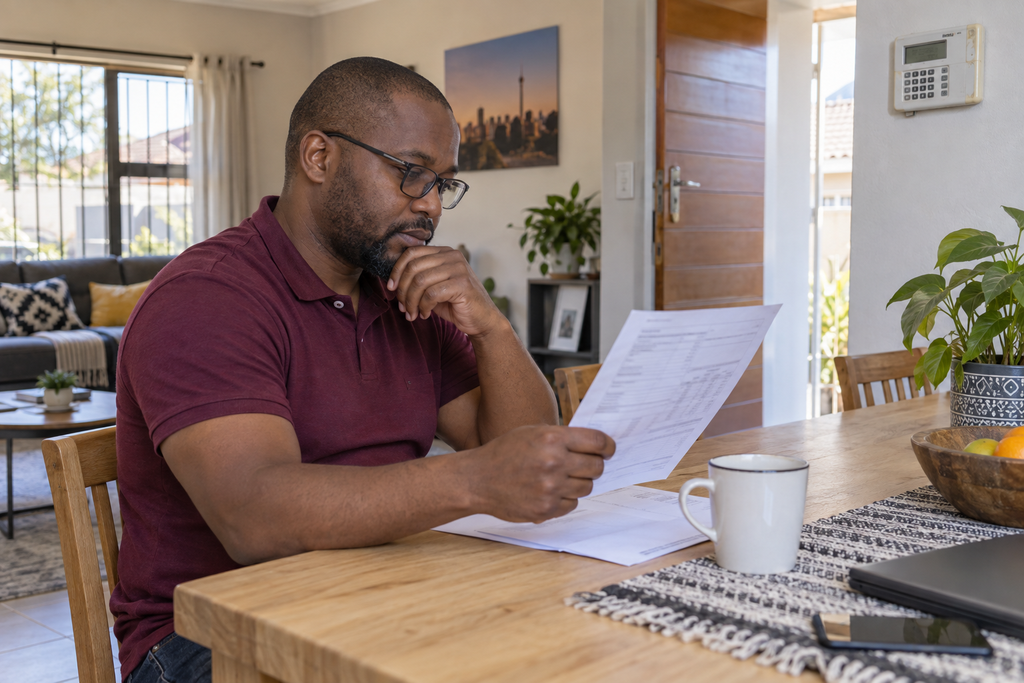
Table of Contents
What Does “Electricity Supplier” Mean?
When people ask who supplies their electricity, they usually want to know which organisation manages their connection, electricity account and distribution service.
That is different from asking where the electricity was generated.
For your household enquiry, the useful question is:
“Which organisation is responsible for the electricity connection serving this property?”
There may be several organisations involved between the wider electricity system and the payment you make.
| Organisation or role | What it means for your household |
|---|---|
| Eskom as your direct supplier | Your electricity connection and customer relationship are directly with Eskom |
| Municipality or municipal electricity utility | Your local electricity service is managed through the municipality or its electricity entity |
| Private metering company or reseller | A separate operator may manage your unit’s submeter, purchases or billing |
| Shop, bank or payment app | The business processes your purchase but may not be your electricity distributor |
| Landlord or managing agent | The person or organisation may hold the main account or collect payment from occupants |
The same home can therefore have a municipal network connection, a private submeter and a banking app used to buy electricity.
Those roles should not be confused.
Eskom’s tariff information explicitly distinguishes customers supplied directly by Eskom from municipal bulk electricity purchases. That distinction is one reason a municipality’s electricity customer is not automatically an Eskom retail customer. Eskom’s tariffs and charges.
The Quickest Way to Identify Your Electricity Supplier
Start with whichever reliable document you already have.
| What you have | What to check first | What to do next |
|---|---|---|
| A recent Eskom electricity statement | Account holder, supply address and meter details | Ask Eskom to confirm the account serves your property |
| A municipal statement | The electricity section, not only the municipal logo | Confirm that the electricity entry relates to your meter |
| A prepaid electricity receipt | Supplier details, meter number and transaction reference | Ask the named supplier or vending support team to identify the distributor |
| A private metering receipt | Operator name and unit or meter details | Ask who supplies the building’s main connection |
| Only a keypad or meter | The available meter identification details | Contact the landlord, agent or official customer service channel |
| No paperwork after moving in | Handover records and previous electricity arrangements | Request supplier confirmation before changing account or payment details |
A document is useful only if it belongs to the correct property and connection. An old bill left by a previous tenant, for example, should be checked rather than accepted without question.
How to Check If Your Electricity Is Supplied by Eskom or Your Municipality
Step 1: Read the electricity section of your latest account
If you receive a monthly account, open the complete statement.
Look for:
- The organisation issuing the electricity charges.
- The electricity account number.
- The property’s supply address.
- The meter number, where shown.
- The tariff name or code.
- The period covered by the charges.
- Electricity-specific customer service information.
The electricity section matters more than the name at the top of a general municipal account.
You can receive a municipal bill for property rates or other services without that bill establishing who supplies your electricity. Check whether electricity actually appears as a service on the statement.
Likewise, the postal address is not always the supply address. An owner might receive bills at another property or through a managing agent.
Match the service address to the home you are investigating.
What if the account has no electricity consumption entry?
An absent consumption line does not settle the question on its own.
You might use prepaid electricity, receive electricity charges through a separate account or live in a property where the landlord handles the main connection.
Look for supporting documents instead of assuming that no electricity line means no municipal involvement.
If an electricity service charge appears but no consumption is billed, ask the account provider to explain the arrangement. A charge may help identify the account relationship, but you should still confirm the connection and meter.
What if the statement is in someone else’s name?
For a rented home, this may be the landlord, property owner or body corporate.
Ask the authorised account holder to confirm the supplier and explain how tenants should report faults or raise billing questions.
Do not try to access another person’s account using their personal information. The supplier may require authorisation before discussing account-specific details with you.
Step 2: Check a full prepaid electricity receipt
If you buy prepaid electricity, find the complete purchase receipt or transaction details.
The most useful fields are:
- Meter number.
- Electricity supplier or utility name, if displayed.
- Vending operator or payment provider.
- Purchase date and time.
- Transaction reference.
- Units issued.
- Customer support details.
The receipt format depends on the purchase channel. Some banking apps show only a short confirmation unless you open the transaction or request a receipt.
A notification saying “electricity purchase successful” may prove that a payment went through, but it may not identify the distributor.
The retailer’s name is not necessarily the supplier’s name
Buying electricity from a supermarket does not mean the supermarket operates your local electricity network.
Similarly, a bank logo on a receipt identifies the payment channel. It does not automatically identify the organisation responsible for outages or tariffs.
If the receipt is unclear, ask:
Which electricity utility or distributor is this meter registered with? Please distinguish that organisation from the payment provider or private vending operator.
Keep the transaction reference available. It gives the support team a specific purchase to investigate.
Do not confuse the token with the meter number
A token is the code issued for a particular purchase or meter instruction. The meter number identifies the device or registered metering point used in the transaction.
When asking who supplies the property, use the meter number requested by the official support team, not an unrelated reference or token code.
Avoid posting complete receipts or unused tokens publicly. Send identifying information through verified customer service channels.
Step 3: Match the paperwork to the correct meter
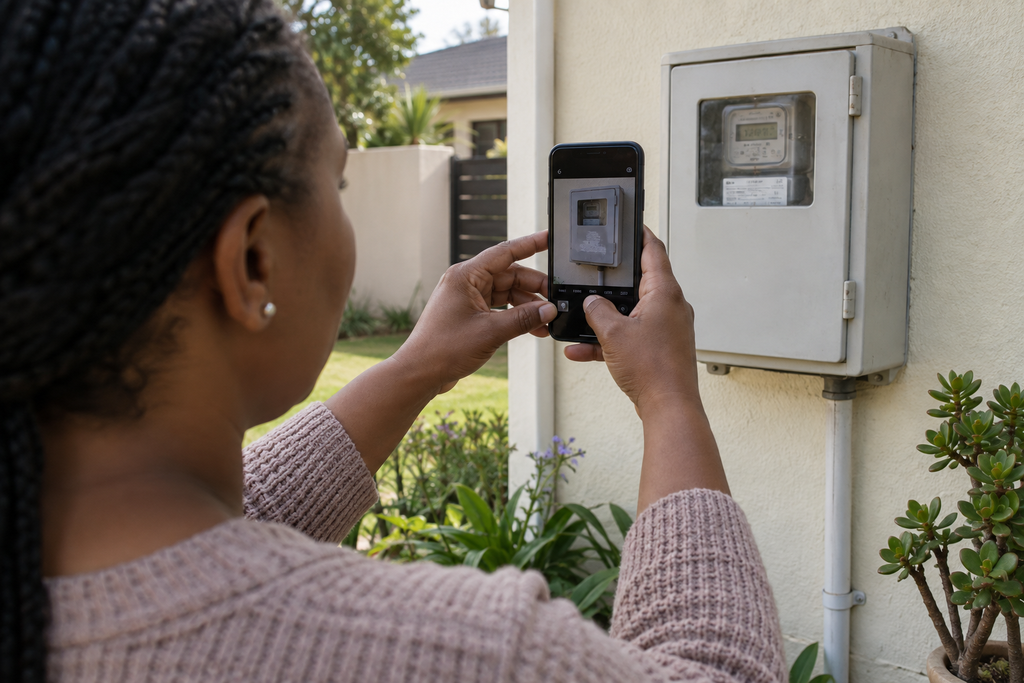
A supplier name on a receipt is not enough if the receipt belongs to another meter.
Compare the number on your purchase record with the available identification on the meter or its approved documentation.
Take a clear photograph of the identification label where it is safely accessible. Record which property or unit the meter serves.
This is particularly useful when:
- Several meters are installed together.
- You rent a backyard room or separate cottage.
- A house has been divided into units.
- Your meter was recently replaced.
- You moved into a complex with private submeters.
- A banking app still contains a previously saved meter number.
A saved payment nickname such as “Home Electricity” is something a user entered. It is not independent confirmation that the number belongs to the home you currently occupy.
The keypad may not be the actual meter
Some prepaid systems have a separate customer interface unit inside the home. This is the keypad used to enter tokens or view information, while the metering equipment is elsewhere.
Do not assume every serial number on the keypad is the meter number required by the supplier.
Use the correct device instructions or ask the supplier how to retrieve the registered number. Avoid trying random online keypad codes that may be intended for another model.
The manufacturer’s name also does not identify the distributor. A meter brand describes the equipment, while the supplier is the organisation responsible for the service.
There is no need to open a sealed meter, electrical cabinet or street box to complete this check.
Step 4: Ask the landlord or managing agent about the main connection
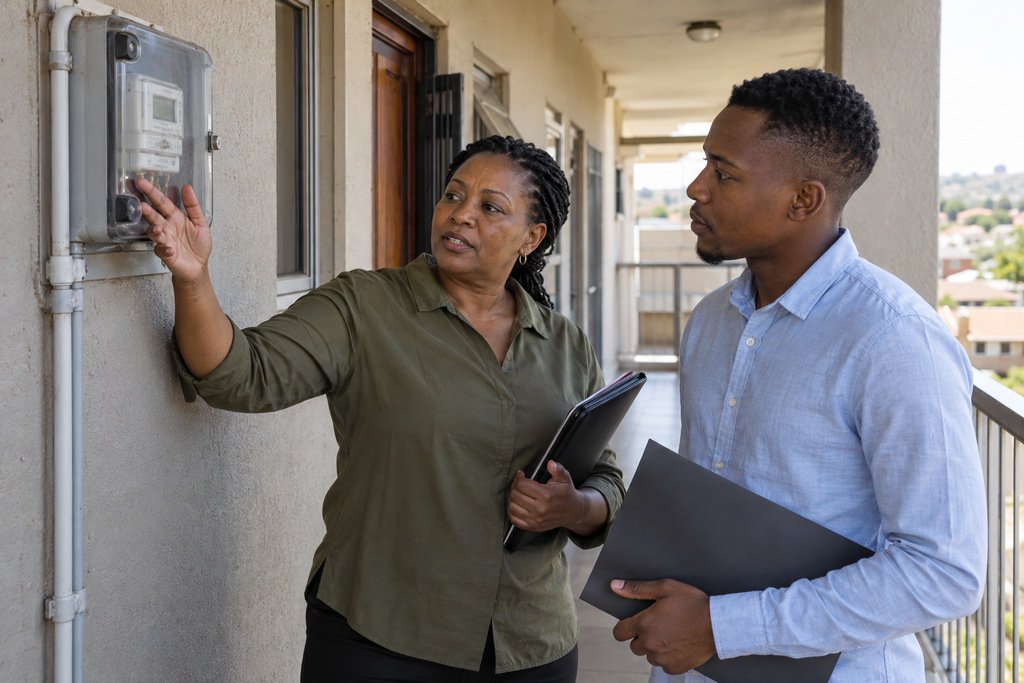
For tenants and complex residents, there may be two separate answers:
- Who supplies electricity to the building or property?
- Who manages the electricity charges for your individual unit?
Ask both questions.
A private submeter may record your unit’s consumption while the building receives electricity through a larger main connection. Your private metering operator may handle token problems, while an area outage involves the upstream distributor.
Request the following information from the landlord or agent:
- The supplier serving the main connection.
- The name of any private metering operator.
- Confirmation of which meter serves your unit.
- The correct contact for a failed purchase or token.
- The correct contact for a whole-building outage.
- Who is authorised to log faults against the main account.
You do not necessarily need the owner’s entire municipal statement. A relevant, appropriately redacted section or written confirmation may provide what you need without exposing unrelated personal information.
A practical example
Imagine that you rent a flat and buy electricity through a private metering company.
Your receipt identifies that company, but all the flats suddenly lose power. The metering company’s name alone does not tell you whether the problem is with its system, the building’s electrical installation or the distributor’s network.
The managing agent should help establish the scope of the outage and identify the main supplier. A technician or distributor may then need to investigate the appropriate part of the system.
Knowing these contacts before an outage saves you from trying several unrelated support numbers while your phone battery runs down.
Step 5: Confirm the connection through an official channel

Once you have the supply address and meter information, request confirmation from the organisation indicated by the records.
For a possible direct Eskom connection, Eskom’s customer service page lists 0860 037 566. It asks customers to have identifying information such as account or meter numbers, address details and contact information ready. Eskom customer service.
Explain that you want to confirm the supplier for a specific connection. Do not ask only whether Eskom serves a broad suburb.
For a possible municipal connection, use the municipality’s official website to find its electricity department or municipal utility.
If you are in Johannesburg and need help identifying the relevant municipal account arrangement, the official e-Joburg portal lists 0860 562 874 and Joburgconnect@joburg.org.za for general queries. Ask for the correct electricity service channel where necessary. These are municipal enquiry contacts, not a claim that every Johannesburg address is municipally supplied. Official e-Joburg contact information.
Ask the responding organisation to confirm:
- Whether it supplies the specific property or connection.
- Whether the meter number matches its records.
- Which organisation should handle account queries.
- Which channel should receive outage reports.
- Whether the connection sits behind a privately managed main supply.
Save the answer and any reference number.
A failed automated lookup is not conclusive proof that the organisation does not supply the property. A mistyped number, replacement meter or account mismatch may require a person to investigate.
Can You Identify the Supplier From Your Suburb?
Your suburb is a useful starting point, but it is weaker evidence than an account or connection-specific confirmation.
A municipal boundary tells you which local authority governs an area. It does not, by itself, establish the electricity account relationship for every property inside that boundary.
Avoid reasoning such as:
“My address is in Johannesburg, so my electricity must be supplied through the City.”
Instead, establish who supplies your precise address and meter.
The same caution applies when neighbours answer from experience. Their information can help you decide whom to contact first, but it should not replace a check of your own connection.
This matters especially where a property has multiple units, a private main supply or a recently changed metering arrangement.
If an official supply-area map is available, use it to narrow the enquiry. Check the map’s date and level of detail, then verify the property where boundaries or connection arrangements remain unclear.
Can Load-Shedding Schedules Tell You Who Supplies Your Electricity?
Schedules can provide supporting information, but they should not be your only evidence.
Eskom’s load-shedding website separates direct Eskom customer searches from information for municipal customers. This makes the official schedule a useful cross-check once you know which customer category applies. Eskom’s official load-shedding information.
However, finding a suburb name in an app or schedule does not replace confirmation of the electricity account serving your home.
An app can use area labels for convenience. A label may not explain a complex’s private supply arrangement or establish who should correct your tariff.
Also remember that an interruption is not automatically load shedding. A power loss may involve a local fault, planned maintenance or an issue within the property.
Check the current official notice and your account details separately. The schedule helps explain timing; the supplier record establishes the customer relationship.
How to Check Online Without Creating More Confusion
Online tools are useful when you start from a verified website and know what information you are looking for.
Eskom customer accounts
Eskom’s Customer Service Online portal provides access routes using an Eskom account number or a prepaid meter number, together with a password. It is an account service, not an unrestricted public database of every property’s supplier. Eskom Customer Service Online.
Use it for an account you are authorised to access. A landlord or account holder may need to retrieve the relevant information for a tenant.
If registration or login fails, record the error and ask support for help. Do not treat the failure as a final supplier determination.
Eskom’s Alfred chatbot
Eskom describes Alfred as a service for Eskom customers using account or meter information. It supports reporting interruptions and following up existing faults, and Eskom links to it through its official website. Eskom’s Alfred chatbot guidance.
Access it from that official page rather than an unsolicited message.
The chatbot can help with the Eskom customer process, but a response that does not recognise your information may need further checking.
Municipal customer portals
Where your municipality provides an account portal, inspect the service details and supply address on the actual account.
Do not assume successful registration for a municipal portal means the municipality supplies your electricity. The account may concern other services.
For example, e-Joburg provides access to municipal statements and account interactions. You still need to examine the electricity-related information for the property in question. City of Johannesburg’s e-Joburg portal.
Who Should You Contact Once You Know the Supplier?
The correct organisation also depends on the problem.
| Problem | Practical starting point |
|---|---|
| Electricity charges on a direct Eskom account | Eskom’s official account-query channel |
| Electricity charges on a municipal account | The municipal billing or electricity service channel |
| Prepaid payment taken but purchase details missing | The payment channel’s verified transaction support |
| Private submeter charge or unit allocation | The private metering operator or managing agent |
| Suspected area outage | The confirmed distributor’s fault-reporting channel |
| Only your unit is affected in a complex | The managing agent, while checking the meter status and scope of the problem |
| A fault involving internal wiring | The owner or responsible manager and an appropriately qualified electrician |
| Fallen wires, sparks or exposed electrical equipment | Keep clear and use the appropriate emergency reporting channel immediately |
This table identifies sensible starting points, not a final technical diagnosis.
Responsibility can depend on where the fault is located. A supplier may need to investigate its equipment, while an electrician may need to assess the installation within the property.
You should not have to determine the technical cause before reporting a dangerous situation.
What to Do If Eskom and the Municipality Both Refer You Elsewhere
Being sent between support teams is frustrating. The next step is to improve the information attached to the enquiry.
Create one short evidence file containing:
- Full street address, including unit number.
- Meter number and a clear photograph.
- A recent electricity receipt or statement.
- The name of any private metering company.
- Relevant account information you are authorised to provide.
- Previous reference numbers.
- A summary of what each organisation said.
Ask each organisation to clarify whether it is saying:
- The property is outside its supply area.
- The number provided is not recognised.
- The connection is held under another account.
- The number belongs to a private submeter.
- More information or account-holder authorisation is required.
These are different explanations and require different follow-up.
If a meter was replaced, request the old and new meter details from the account holder or installer’s records. If the address appears differently across documents, identify those variations.
Ask for escalation to a team that can verify the supply point or metering record. Keep the request specific rather than opening several unrelated complaints.
What to Check When Moving Into a Home

Before moving day, ask the owner or agent to confirm the electricity arrangements in writing.
Record:
- The main electricity supplier.
- Whether your unit has a private submeter.
- The meter number used for purchases.
- Whether electricity is prepaid or billed afterwards.
- The account holder and any transfer requirements.
- The verified fault-reporting contact.
- The contact for payment or token problems.
Take a dated photograph of the accessible meter display at handover. For a prepaid meter, record the remaining balance. For a conventional meter, record the reading.
This does not replace the supplier’s account-transfer process, but it creates a useful handover record.
Do not assume a previous occupant’s saved meter number, payment details or service arrangement is correct for your tenancy. Confirm before your first purchase.
If several households share a property, ask how electricity costs and faults are handled. A clear explanation at the start is easier than resolving uncertainty after a large purchase or outage.
Common Mistakes to Avoid
Assuming a municipal account proves municipal electricity supply
Read the electricity section and check the relevant meter. A statement covering rates or water does not answer the electricity question by itself.
Identifying the supplier from the meter brand
The equipment manufacturer and the electricity distributor perform different roles. Use account records and supplier confirmation.
Treating a payment app as the distributor
The app may process payments without managing the network. Its support team can investigate transactions, but it may not handle area faults.
Relying only on a neighbour’s answer
Use their experience as a lead, then confirm your own connection.
Sending the wrong number
Distinguish the meter number, account number, transaction reference and token. Ask which identifier the support team needs.
Sharing complete account documents publicly
Use verified private channels. Redact personal details before posting screenshots in community groups.
Searching for a national list and stopping there
A broad list may help identify likely contacts, but connection-specific records provide a stronger answer.
Frequently Asked Questions
Can I have a municipal account and still buy electricity directly from Eskom?
Yes. A municipal account can relate to services other than electricity. Check the electricity records separately rather than relying on the existence of the municipal account.
Does buying prepaid electricity mean I am an Eskom customer?
No. Prepaid is a payment arrangement, not proof of supplier identity. Establish which organisation and tariff are attached to the meter.
Can I use only my meter number to find the supplier?
A meter number can help an official support team investigate, but it may not be enough on its own. Have the address and a recent receipt available, particularly if the device is a private submeter.
What if electricity is included in my rent?
Ask the landlord who supplies the property and how faults should be reported. You still benefit from knowing whether an interruption should go through the landlord, a metering operator or the distributor.
Is City Power the same organisation as Eskom?
No. Do not use the names interchangeably when describing an account or fault. In Johannesburg, establish which organisation is responsible for your specific electricity connection through the relevant official account records.
Can I choose whichever supplier has the cheapest tariff?
Do not assume household supplier arrangements can be changed like a mobile data package. Ask the relevant distributor what options, if any, are available for your connection. Supplier identity and tariff eligibility are separate questions.
Why does it matter before checking electricity prices?
You need the tariff applying to your own supply arrangement. Cape Town, for example, states that its residential tariffs apply within its electricity supply area and directs readers to Eskom for Eskom tariffs. A rate published by one supplier should not automatically be used to assess another supplier’s receipt. Cape Town’s electricity tariff guidance.
Conclusion
The most reliable way to identify your electricity supplier is to connect three pieces of information: the correct property, the correct meter and the organisation responsible for that connection.
Start with the electricity account or prepaid receipt, involve the landlord where a private metering arrangement exists, and obtain official confirmation when details are unclear. Save the confirmed supplier and support contacts so you can report the next problem to the right place.