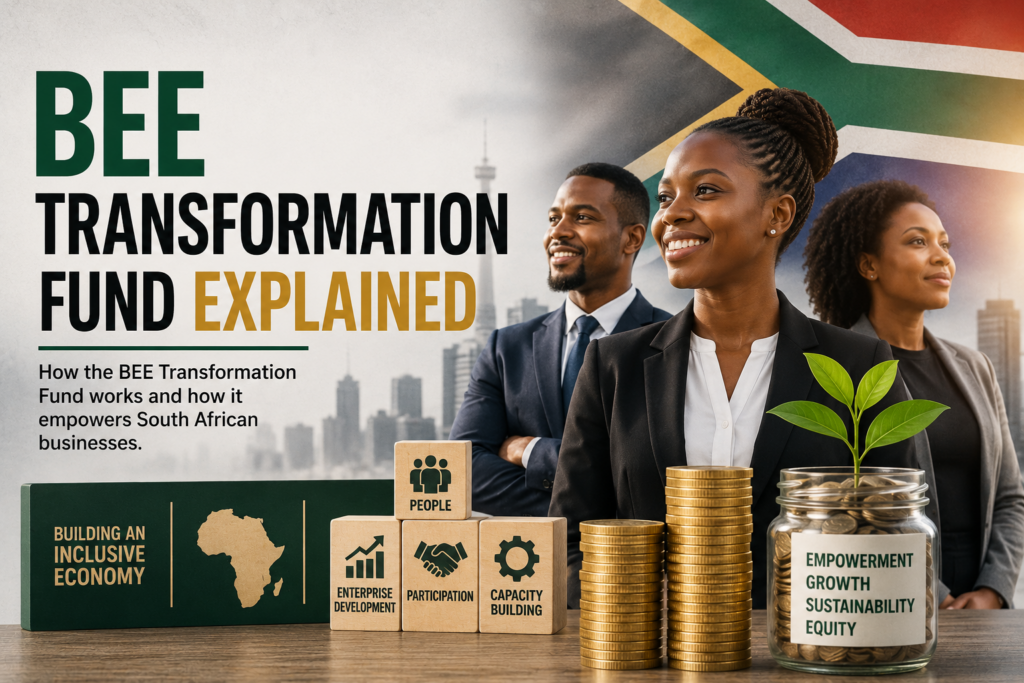
The Department of Trade, Industry and Competition (DTIC), under Minister Parks Tau, published draft amendments to South Africa’s Broad-Based Black Economic Empowerment (B-BBEE) codes on 29 January 2026, proposing a state-managed “Transformation Fund” that businesses could contribute to instead of some existing empowerment spending. The proposal, still at draft stage with public comment closing on 30 March 2026, has become one of the more closely watched economic policy debates of the year.
What the draft amendments propose
The centrepiece of the draft amendments is a Transformation Fund with a target size of R20 billion, into which businesses could pay 3% of Net Profit After Tax as an alternative to their existing Enterprise and Supplier Development (ESD) spending obligations under the current B-BBEE scorecard. Alongside the fund, the draft proposes new procurement targets: 15% of measured procurement spend directed to 100% black-owned qualifying small enterprises, and a further 15% to 100% black-owned micro-enterprises. The draft also proposes raising the total points available on the ESD scorecard element from 40 to 62, with a practical cap of 47 points achievable under the new structure.
Why government is proposing this change
The stated rationale, as reported by Daily Maverick and other outlets, is to channel empowerment spending toward a centrally managed fund that can direct capital more strategically toward black-owned businesses, rather than relying solely on individual companies’ own enterprise and supplier development choices, which critics argue have sometimes produced compliance-driven rather than genuinely transformative outcomes.
Who supports it, and who doesn’t
Reporting on the proposal describes a divided response. Some business voices have publicly urged reform of B-BBEE rather than removal, arguing the current system, whatever its flaws, has contributed to real growth in the black middle class over the past two decades. Others — including the DA, which had its own “Economic Inclusion for All Bill” reach a first parliamentary reading around May 2026, and advocacy group Free SA — have pushed for race-neutral alternatives to empowerment law rather than an expanded, centrally managed fund model.
This debate connects to broader tensions within the coalition government — see our analysis, whether the GNU can survive an election it’s afraid to lose, for the wider political context in which this specific policy proposal is being contested.
What this could mean for businesses
- Companies could gain the option to meet part of their empowerment scorecard obligations by contributing to the Transformation Fund rather than running their own enterprise and supplier development programmes — though this remains a draft proposal, not current law.
- New procurement targets aimed specifically at 100% black-owned small and micro enterprises would represent a more prescriptive requirement than some elements of the current scorecard.
- Businesses currently structuring empowerment compliance around the existing scorecard should watch the outcome of the public comment process closely, since final amendments could alter compliance strategy significantly.
Important: this is still a draft
It bears repeating that these amendments remain in draft form, having been published for public comment with that comment period closing on 30 March 2026. They are not yet enacted law, and the version that eventually takes effect — if any version does — may differ from the draft in response to submissions received during the comment period. Businesses and readers should treat the specific figures and targets described here as proposed, not confirmed, until a final version is gazetted.
Background: two decades of B-BBEE policy
B-BBEE has been a central pillar of South Africa’s post-apartheid economic policy since the early 2000s, aimed at redressing historical racial exclusion from ownership, management and procurement opportunities in the economy. It has evolved through several iterations of codes and scorecards, and has remained a persistently contested policy area, with debate recurring over whether it should be reformed, expanded, replaced with race-neutral alternatives, or scrapped — a debate this latest set of draft amendments has reignited.
What happens next
The DTIC is expected to review submissions received during the public comment period before finalising any amendments, a process that can take months and sometimes longer for changes of this significance. Businesses, industry bodies and opposition parties are likely to continue lobbying on the proposal’s final shape in the interim.
How the proposed changes would affect smaller businesses
Larger corporates, with dedicated compliance teams, are generally better positioned to navigate a more complex scorecard structure, including new procurement targets and the option to contribute to the Transformation Fund. Smaller businesses — particularly those just above the threshold requiring formal B-BBEE compliance — may find a more complex points structure and expanded scorecard more costly to comply with in relative terms, even if the underlying policy intent is to direct more opportunity toward black-owned small and micro enterprises specifically. This tension between supporting small black-owned businesses as beneficiaries of the policy, while potentially raising compliance costs for smaller businesses more broadly as compliant entities, is a recurring theme in submissions on B-BBEE amendments of this kind.
What a “measured procurement spend” target actually means
The proposed 15%-plus-15% procurement targets for 100% black-owned small and micro enterprises would apply to a company’s “measured procurement spend” — broadly, the portion of a company’s purchasing that counts toward its B-BBEE scorecard under the procurement element, rather than every rand a company spends. Precisely how measured procurement spend is defined and calculated can significantly affect how achievable a given percentage target is in practice for companies in different industries, which is one of the technical details large corporates and industry bodies have reportedly focused on in their submissions during the public comment period.
What happens to the current scorecard while the draft is being finalised
Until any final amendments are gazetted, businesses remain subject to the current B-BBEE codes and scorecard as they stand today. Companies planning multi-year empowerment strategies face a genuine planning challenge in this interim period, since decisions made under the current codes may need to be revisited once — and if — the amended codes take effect, depending on how significantly the final version differs from the current draft.
Why B-BBEE amendments typically take years to settle
South Africa’s B-BBEE codes have been amended several times since the policy’s introduction, and each round of amendments has generally taken considerable time from initial draft to final, settled implementation, partly because of the scale of consultation required across industry sectors with very different structures and challenges. Businesses have learned, from this history, to treat draft amendments as a strong signal of likely future direction worth planning around, without necessarily restructuring compliance strategy entirely until a final version is confirmed.
Frequently asked questions
Is the R20 billion Transformation Fund already law?
No. As of this article’s publication, the fund and related amendments remain draft proposals published for public comment, not enacted legislation.
How would the Transformation Fund change how businesses comply with B-BBEE?
Under the draft proposal, businesses could contribute 3% of Net Profit After Tax to the fund as an alternative route to meeting part of their Enterprise and Supplier Development scorecard obligations, rather than running that spending through their own programmes.
Sources Used
- Daily Maverick — 'The state's R20bn gamble to rewrite SA's B-BBEE rules'
- Cliffe Dekker Hofmeyr — draft B-BBEE amendments legal analysis
- EWN — 'Business voices urge reform not removal of BEE amid rising criticism'
- allAfrica — DA Economic Inclusion for All Bill coverage