
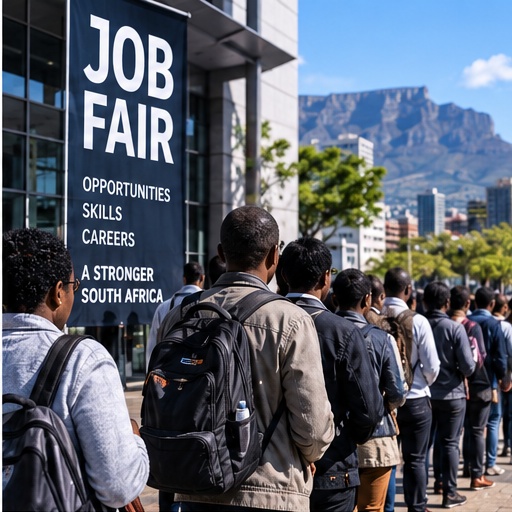
Why Is It So Hard to Find a Job in South Africa? The Real Reasons
Why is it so hard to find a job in South Africa? The simplest answer is that there are far more people looking for work than there are jobs being created, while slow economic growth, skills mismatches, lack of work experience, geographic barriers and structural problems make the competition even harder. In the second quarter of 2026, South Africa’s official unemployment rate reached 33.6%, with approximately 8.5 million people officially unemployed. (Statistics South Africa)
That means someone who sends dozens of applications without receiving an interview should not automatically conclude that their CV is the only problem.
A good CV matters. Qualifications matter. Interview skills matter.
But South Africa also has a much bigger problem:
There simply aren’t enough jobs for everyone who needs one.
This article explains why finding work is so difficult, why even graduates struggle, why employers ask for experience for entry-level jobs, whether qualifications still matter, and what job seekers can realistically do to improve their chances.
Table of Contents
Why Is It So Hard to Find a Job in South Africa? Quick Answer
Several problems are happening at the same time:
| Problem | Why it makes finding work harder |
|---|---|
| High unemployment | Many applicants compete for limited vacancies |
| Slow job creation | New jobs aren’t being created quickly enough |
| Lack of experience | Entry-level applicants can be screened out |
| Skills mismatch | Qualifications don’t always match employer needs |
| Location | Jobs are concentrated in particular economic areas |
| Transport costs | Searching and travelling to work can be expensive |
| Education gaps | Some applicants lack required qualifications or skills |
| Economic constraints | Weak investment and growth limit hiring |
| Technology | Recruitment systems can screen applications quickly |
| Networking | Some opportunities are filled through referrals and connections |
| Information gaps | Job seekers don’t always know where legitimate vacancies are |
| High application volumes | Employers can be extremely selective |
No single explanation applies to every job seeker.
But together, these factors help explain why getting employed can feel almost impossible.
How Bad Is Unemployment in South Africa Right Now?
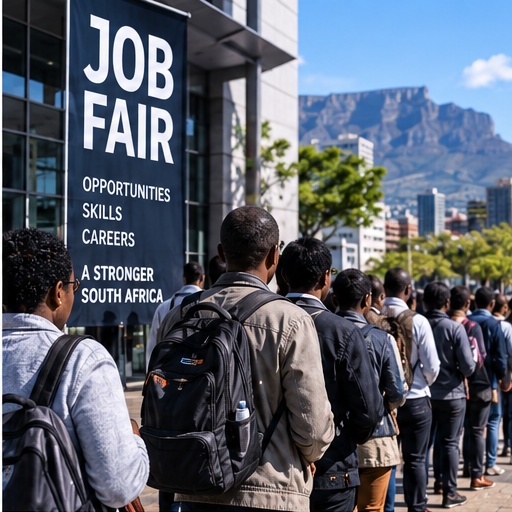
The numbers are severe.
Statistics South Africa’s latest Quarterly Labour Force Survey showed that the official unemployment rate increased from 32.7% in Q1 2026 to 33.6% in Q2 2026.
The number of unemployed people increased by 345,000 during the quarter to approximately 8.5 million, while the number of employed people stood at about 16.7 million. (Statistics South Africa)
There were also about 3.7 million discouraged job seekers.
A discouraged job seeker is broadly someone who wants work but has stopped actively searching because they have lost hope of finding employment or face other barriers to searching.
That number tells us something important.
South Africa’s employment problem isn’t just about people who haven’t found the right CV template.
It is a structural economic problem.
Is Finding a Job Difficult Because There Aren’t Enough Jobs?
Yes. This is one of the biggest reasons.
Imagine 500 qualified people applying for 10 positions.
Even if every applicant is competent, only 10 can be hired.
The other 490 people aren’t necessarily unemployable.
There simply aren’t enough positions.
This distinction matters because job-search advice often focuses entirely on the individual:
Improve your CV.
Get more qualifications.
Learn another skill.
Apply harder.
All of those things can improve someone’s chances.
But they don’t create an additional vacancy.
South Africa needs both:
better-prepared job seekers
and
more actual jobs.
The Presidency acknowledged in August 2026 that about 300,000 net new work seekers enter the labour force each year, while economic growth below 3% has not been enough to expand employment at the required pace. (Government of South Africa)
Why Isn’t South Africa Creating Enough Jobs?
There isn’t one reason.
Government itself has identified several structural problems, including:
- skills mismatches;
- spatial concentration of economic activity;
- slow formal private-sector growth;
- barriers to small-business formation; and
- economic concentration. (Government of South Africa)
Other long-running problems have included weak investment, infrastructure constraints, unreliable electricity, logistics problems and declining capacity in parts of the state.
The government’s own assessment of progress against the National Development Plan has acknowledged that South Africa is not on course to achieve its original unemployment-reduction targets. (Government of South Africa)
The World Bank has similarly identified insufficient job creation alongside infrastructure bottlenecks, skills shortages, limited competition and other structural constraints. (World Bank)
In simple terms:
Businesses create jobs when they grow.
If companies aren’t expanding rapidly enough, they don’t need enough additional workers to absorb millions of unemployed people.
Why Do Entry-Level Jobs Ask for Experience?
This is one of the most frustrating questions for young job seekers.
You search for an “entry-level” position.
Then the advert says:
2–3 years’ experience required.
And naturally you ask:
How am I supposed to get experience if nobody will hire me without experience?
Employers may request experience because hiring someone who already knows the work can reduce:
- training time;
- supervision;
- mistakes;
- onboarding costs; and
- perceived hiring risk.
From the employer’s perspective, experience can therefore be attractive.
From the job seeker’s perspective, it creates a catch-22.
You need experience to get the job, but you need a job to get experience.
That is a genuine labour-market problem.
How Can You Get Experience When Nobody Will Hire You?
You may need to broaden what you count as experience.
Depending on the career, useful evidence can come from:
- internships;
- learnerships;
- apprenticeships;
- volunteering;
- temporary work;
- freelance projects;
- casual employment;
- university projects;
- community projects;
- personal portfolios;
- part-time work; and
- practical training.
For example, someone trying to enter digital marketing could build a small website or social account and demonstrate measurable results.
A junior developer can create projects.
A designer can build a portfolio.
An administrator can demonstrate Excel, Word and organisational skills.
An aspiring artisan can prioritise accredited workplace training.
This won’t solve South Africa’s unemployment problem.
But it can help an individual applicant answer:
“What evidence do you have that you can do this work?”
Why Is It Hard to Find a Job Even With Matric?
Because Matric alone doesn’t guarantee employment.
Stats SA’s Q2 2026 data showed an unemployment rate of 36.0% among people whose highest education level was Matric.
For people with less than Matric, unemployment was even higher at 39.2%. (Statistics South Africa)
That doesn’t make Matric worthless.
Finishing school remains important because many employers require it as a minimum qualification.
But when millions of other job seekers also have Matric, the certificate by itself doesn’t necessarily distinguish one applicant.
Employers may additionally look for:
- work experience;
- driver’s licences;
- computer skills;
- communication ability;
- occupational certificates;
- technical skills; or
- role-specific knowledge.
Why Is It Hard to Find a Job Even With a Degree?
Because a degree improves your odds, but it does not guarantee employment.
This is an important distinction.
According to Stats SA, graduates had an unemployment rate of 12.4% in Q2 2026.
That is dramatically lower than:
- 36.0% for people with Matric; and
- 39.2% for people with less than Matric. (Statistics South Africa)
So the claim that “degrees are useless” isn’t supported by these numbers.
Graduates, as a group, have a much lower unemployment rate.
But 12.4% is not zero.
Some graduates still struggle because:
- their field has limited vacancies;
- employers want experience;
- their skills don’t match available roles;
- they live far from employment centres;
- they lack workplace exposure;
- economic growth is weak; or
- many other graduates are competing for the same jobs.
A qualification can improve your position without guaranteeing the outcome.
Does What You Study Matter?
Yes.
Not every qualification has the same labour-market demand.
An economy can simultaneously have:
high unemployment
and
shortages of specific skills.
That sounds contradictory, but it isn’t.
Imagine 100,000 people are unemployed.
At the same time, employers need 5,000 people with highly specialised technical skills.
If the unemployed workers don’t have those skills, vacancies can remain unfilled while unemployment remains high.
The World Bank highlighted exactly this kind of problem in South Africa’s digital economy in 2026: there can be demand for digital workers while gaps in foundational skills, training alignment and workplace learning prevent job seekers from filling those opportunities. (World Bank)
This is called a skills mismatch.
What Is a Skills Mismatch?

A skills mismatch occurs when the skills job seekers have don’t align well with the skills employers need.
For example:
A company may need:
- electricians;
- software developers;
- welders;
- data analysts;
- nurses;
- technicians; or
- qualified artisans.
But the local unemployed population may have very different qualifications.
The problem isn’t necessarily that unemployed people are “unskilled.”
It may be that their skills don’t match the vacancies being created.
This is one reason government has been pushing changes to the skills-development system, including greater emphasis on workplace training, TVET colleges and artisan development. (Government of South Africa)
Are There Too Many People Applying for the Same Jobs?
Often, yes.
High unemployment naturally produces high competition.
A basic administrative, retail, customer-service or entry-level position can attract large numbers of applications.
This changes how recruitment works.
An employer who receives 20 applications may carefully consider almost everyone.
An employer who receives hundreds may use much stricter filters.
A small difference such as:
- relevant experience;
- location;
- availability;
- driver’s licence;
- software knowledge;
- qualification; or
- CV quality
can become enough to eliminate candidates.
That doesn’t always mean the rejected applicant was incapable of doing the job.
It can simply mean another applicant matched the requirements more closely.
Why Do I Apply for Jobs and Never Hear Back?
There are several possible reasons.
Your application doesn’t match the minimum requirements
If the advert requires a specific licence, qualification or experience and you don’t have it, you may be screened out immediately.
Your CV isn’t tailored
A generic CV sent to every employer can hide the experience most relevant to a particular job.
Your CV is difficult to scan
Recruiters often need to understand your experience quickly.
Complicated formatting can work against you.
You applied too late
Some employers begin reviewing applications before the closing date.
The competition was stronger
You can submit a good application and still lose to a better-matched applicant.
Your contact details are wrong
A mistyped phone number or email address can cost you an opportunity.
The vacancy attracted huge interest
Sometimes the problem isn’t your application at all.
There were simply too many candidates.
Are Applicant Tracking Systems Rejecting CVs?
Some larger employers use Applicant Tracking Systems (ATS) and other recruitment software to organise applications.
This is one reason your CV should clearly reflect relevant information from the job advertisement.
But don’t fall for the internet myth that every rejection is caused by a mysterious “ATS robot.”
Recruitment processes vary widely.
Some companies use sophisticated software.
Others use basic email applications.
Some applications are reviewed manually.
The safest approach is straightforward:
- use clear headings;
- avoid unnecessary graphical clutter;
- include relevant skills;
- use accurate job titles;
- include keywords naturally where truthful; and
- tailor the CV to the actual vacancy.
Don’t stuff your CV with keywords you don’t genuinely possess.
Is AI Making It Harder to Get a Job?
AI is changing both recruitment and work itself, but it would be misleading to blame South Africa’s unemployment crisis primarily on AI.
South Africa had extremely high unemployment long before the current generative-AI boom.
However, AI may change:
- how employers screen applications;
- which administrative tasks need workers;
- what skills employers value;
- how job seekers prepare CVs;
- how candidates prepare for interviews; and
- which occupations grow or shrink.
AI can also create opportunities.
Demand for workers who can effectively use new technology may increase in some sectors.
The smarter response is not:
“AI is taking every job.”
It is:
“Which parts of my work are changing, and what skills will make me more valuable?”
Why Does Location Matter When Looking for Work?
Jobs aren’t evenly distributed across South Africa.
Economic activity is concentrated in particular:
- cities;
- industrial areas;
- business districts;
- mining regions;
- tourism centres; and
- commercial hubs.
Government has itself identified the spatial concentration of economic activity as one of the country’s structural employment challenges. (Government of South Africa)
A person can therefore have the right skills but live far from the available jobs.
This creates another problem:
job searching costs money.
Does Transport Make Finding Work Harder?
Absolutely.
Imagine you’re unemployed and an interview is 40 kilometres away.
You may need money for:
- taxi fare;
- bus fare;
- train fare;
- printing;
- mobile data;
- food; and
- possibly accommodation.
Now imagine attending several interviews without receiving an offer.
Job searching itself becomes expensive.
And after receiving the job, transport still matters.
A low-paying position may be difficult to accept if getting to work consumes a large portion of the salary.
This is one reason unemployment can’t be understood only as:
person + vacancy.
Location and transport matter too.
Does Having Connections Help You Get a Job?
Yes, professional networks can help.
But there is an important distinction between:
networking
and
unfair favouritism.
Networking means people know:
- what you can do;
- that you’re looking for work;
- what industry interests you; and
- how to contact you.
A former colleague may tell you about a vacancy.
A lecturer might recommend an internship.
A friend might send you a job advertisement.
A LinkedIn connection may introduce you to a recruiter.
Those are normal ways information moves through labour markets.
You should therefore not rely exclusively on clicking Apply on job boards.
Tell trustworthy people in your network that you’re looking.
Why Do Companies Advertise Jobs That Seem Impossible to Get?
Job descriptions sometimes resemble wish lists.
An employer may list:
- degree;
- several years of experience;
- multiple software packages;
- driver’s licence;
- industry knowledge;
- certifications; and
- numerous soft skills
for what appears to be a junior role.
Sometimes these requirements are genuinely necessary.
Sometimes employers describe an ideal candidate rather than the minimum candidate.
If you meet most of the important requirements but not every minor preference, applying may still be worthwhile.
However, don’t ignore mandatory requirements.
If the job legally or operationally requires a professional registration or licence you don’t have, enthusiasm cannot replace it.
Why Are Employers So Picky?
Because high unemployment can give employers a large applicant pool.
If 300 people apply for one vacancy, the employer doesn’t need to ask:
“Could this person possibly do the job?”
They can ask:
“Who is the closest possible match?”
That changes everything.
Experience that would normally be “good enough” may lose to someone with more directly relevant experience.
This is one reason tailoring applications matters so much in a high-unemployment labour market.
Is South Africa’s Job Problem Really a Skills Problem?
Partly—but not entirely.
Skills matter.
Education matters.
Workplace experience matters.
And South Africa genuinely has skills mismatches.
But saying:
“People are unemployed because they don’t have the right skills”
is incomplete.
If skills were the entire problem, graduates wouldn’t experience unemployment.
Yet Stats SA puts graduate unemployment at 12.4%. (Statistics South Africa)
South Africa needs skills development.
But it also needs economic growth and job creation at scale.
The Presidency itself has described the unemployment problem as structural and linked it to slow formal-sector growth, economic concentration, spatial patterns and barriers to enterprise formation—not merely individual qualifications. (Government of South Africa)
Why Don’t Companies Just Hire More People?
Businesses generally hire workers when there is enough work and revenue to justify the cost.
Hiring someone creates costs beyond salary.
An employer may need to pay for:
- wages;
- training;
- equipment;
- office or workspace;
- uniforms;
- insurance;
- administration;
- statutory obligations; and
- management.
If a company isn’t growing, it may have little reason to expand its workforce.
This is why broader economic growth matters.
When businesses:
invest → expand → sell more → open locations → build facilities
they usually need more people.
Without sufficient investment and growth, employment creation remains limited.
Does Small Business Matter for Job Creation?

Yes.
Large companies matter, but a country cannot rely only on a few major corporations to absorb millions of workers.
Small and medium businesses can create employment across:
- retail;
- construction;
- tourism;
- food;
- transport;
- technology;
- professional services;
- manufacturing; and
- local services.
This is why barriers to starting and growing businesses matter for employment.
The Presidency has explicitly identified barriers to small-business formation as part of South Africa’s structural unemployment challenge. (Government of South Africa)
More sustainable businesses can mean more employers.
Is It Worth Applying When 1,000 People Have Already Applied?
Yes, if you genuinely match the role.
Don’t automatically eliminate yourself.
The number displayed on a job platform doesn’t necessarily mean 1,000 fully qualified candidates completed valid applications.
Some may:
- not meet minimum requirements;
- live in the wrong location;
- submit incomplete applications;
- lack required experience;
- apply indiscriminately; or
- abandon the process.
If you meet the requirements, apply.
But don’t spend your entire day repeatedly refreshing one platform.
Use multiple channels.
Where Should South Africans Look for Jobs?
A sensible search can include:
- company career pages;
- reputable job boards;
- government vacancy portals;
- LinkedIn;
- recruitment agencies;
- professional associations;
- graduate programmes;
- internships;
- learnerships;
- apprenticeships;
- networking; and
- direct company vacancy pages.
Be cautious about job scams.
A legitimate employer should not require you to pay money simply to “unlock” a normal job vacancy.
Be particularly suspicious of unsolicited WhatsApp offers promising unusually high salaries for easy work.
Is Applying for 100 Jobs a Day a Good Strategy?
Not necessarily.
Application volume matters, but quality matters too.
Sending the same CV to 100 unrelated positions may produce worse results than carefully applying to 15 jobs you actually match.
A better approach is:
Target → tailor → apply → track → follow up appropriately → improve.
For each vacancy, ask:
- Do I meet the important requirements?
- Does my CV clearly show that?
- Have I used the correct application method?
- Are my contact details correct?
- Have I attached everything requested?
Then apply.
Should You Change Your CV for Every Job?
You don’t need to rewrite your entire employment history every time.
But you should adjust emphasis.
Suppose you previously worked in retail and you’re applying for:
Customer service
Highlight:
- assisting customers;
- complaints;
- communication;
- problem-solving.
Stock control
Highlight:
- stock counts;
- receiving;
- inventory systems;
- expiry management;
- accuracy.
Supervisor
Highlight:
- leadership;
- delegation;
- reporting;
- training;
- operational responsibility.
Same person.
Same employment history.
Different relevant evidence.
Should You Apply for Jobs If You Don’t Have All the Requirements?
It depends on which requirement is missing.
If the advert says:
“Driver’s licence preferred”
and you don’t have one, you might still apply.
If it says:
“Valid driver’s licence required because the employee drives daily”
that’s different.
Similarly, lacking one year of preferred experience may not be fatal.
Lacking a legally required professional qualification probably is.
Use judgment.
How Long Does It Normally Take to Find a Job?
There is no reliable universal timeframe.
Someone can find work in a week.
Another person can search for months.
The timeframe depends on:
- occupation;
- experience;
- qualifications;
- location;
- salary expectations;
- industry;
- economic conditions;
- application quality;
- hiring cycles; and
- luck.
In a country with unemployment above 30%, telling someone they “should” have a job after a certain number of applications is unrealistic.
Instead, monitor whether your strategy is producing progress.
How Do You Know What’s Wrong With Your Job Search?
Use your results.
50 applications and zero responses
Possible issue:
- poor targeting;
- CV;
- requirements mismatch;
- application quality.
Interviews but no offers
Possible issue:
- interview performance;
- examples;
- communication;
- salary expectations;
- stronger competitors.
Recruiters contact you but roles don’t fit
Possible issue:
- CV positioning;
- job-title targeting;
- profile keywords.
You rarely find suitable vacancies
Possible issue:
- occupation demand;
- location;
- experience;
- qualifications;
- overly narrow search.
Diagnose the stage where you’re getting stuck.
Don’t randomly change everything.
Should You Take a Job Below Your Qualification?
There is no universal answer.
If you urgently need income, accepting work outside your ideal career can be rational.
It can provide:
- money;
- work history;
- references;
- routine;
- transferable skills; and
- contacts.
But you don’t necessarily need to abandon your long-term career.
You can continue searching while employed.
The important thing is to avoid viewing temporary work as proof that your education was pointless.
Careers are rarely perfectly linear.
Should You Work for Free to Get Experience?
Be careful.
There is a difference between legitimate:
- volunteering;
- structured internships;
- training;
- portfolio projects; and
- workplace-learning programmes
and an employer simply exploiting free labour.
Before accepting unpaid work, ask:
- What exactly will I learn?
- How long will it last?
- Will I receive a reference?
- Is there supervision?
- Is there a real training component?
- Is the arrangement lawful?
- Is there a realistic benefit to my career?
Don’t work indefinitely for free based on vague promises of a future job.
Are Learnerships and Apprenticeships Worth It?
They can be particularly valuable for people who need the thing employers keep asking for:
workplace experience.
Structured workplace learning can help bridge the gap between education and employment.
Government’s 2026 skills reforms specifically emphasise greater workplace-based learning, occupational training, artisan development and stronger alignment between training and employer needs. (Government of South Africa)
But applicants should verify that programmes are legitimate and properly structured.
What Skills Can Improve Your Chances of Getting Hired?
There is no magic universal skill.
The right skill depends on the work you want.
But broadly useful capabilities can include:
- digital literacy;
- Excel;
- communication;
- customer service;
- sales;
- data handling;
- trade skills;
- driving;
- technical certifications;
- project coordination;
- writing;
- industry software; and
- practical AI-tool literacy.
The key is not collecting random online certificates.
Ask:
Which skills repeatedly appear in real job advertisements for the role I want?
Then build those.
Should You Learn AI Skills?
For many office, marketing, technology and knowledge-based jobs, learning how to use AI tools responsibly can be useful.
But “AI skills” shouldn’t mean:
I know how to type into ChatGPT.
More valuable is combining AI with an actual occupational skill.
For example:
accounting + AI
marketing + AI
Excel + AI
coding + AI
design + AI
research + AI
customer service + AI
AI is more useful as a multiplier of genuine skills than as a replacement for having them.
What Can You Do If You’ve Been Unemployed for a Long Time?
A long employment gap can make searching psychologically and financially difficult.
Focus on rebuilding evidence of activity.
Depending on your circumstances, that might include:
- temporary work;
- freelancing;
- volunteering;
- accredited training;
- portfolio projects;
- short contracts;
- community work;
- learnerships;
- apprenticeships; or
- starting a small service.
Then explain the gap honestly.
You don’t need to invent employment.
A false job history can create bigger problems later.
Should You Start a Business Because You Can’t Find a Job?
Not automatically.
“Just start a business” is often given as if entrepreneurship is an easy substitute for employment.
It isn’t.
A business requires customers.
It may require:
- capital;
- sales;
- marketing;
- skills;
- equipment;
- licences;
- cash flow; and
- risk tolerance.
Entrepreneurship can create a path for some people.
But telling every unemployed South African to become an entrepreneur simply transfers responsibility for a structural employment problem onto individuals.
Start a business when you have a realistic opportunity—not because someone on social media claims employment is obsolete.
Is It Your Fault If You Can’t Find a Job?
Your decisions influence your chances.
You should take responsibility for things you can control:
- CV quality;
- preparation;
- punctuality;
- skills;
- professionalism;
- applications;
- interview performance; and
- job-search strategy.
But it would be inaccurate to pretend that unemployment is purely an individual failure.
When 8.5 million people are officially unemployed, the problem clearly extends beyond individual motivation. (Statistics South Africa)
Both things can be true:
You should improve everything within your control.
And:
South Africa needs substantially more jobs.
What Is Government Doing About Unemployment?
Government says its strategy includes:
- infrastructure investment;
- structural economic reforms;
- skills-system reform;
- support for small businesses;
- industrial policy;
- investment promotion;
- workplace training; and
- employment initiatives. (Government of South Africa)
In August 2026, government and business launched a new phase of their Growth and Jobs partnership with a goal of supporting 3%+ economic growth and one million additional jobs by 2030. (Government of South Africa)
Whether these measures ultimately reduce unemployment substantially should be judged by actual employment outcomes—not merely programme announcements.
What Would Actually Make Finding a Job Easier?
South Africa needs improvement on two levels.
Individual level
Job seekers can improve:
skills + experience + CV + targeting + networking + interview ability
National level
South Africa needs:
economic growth + investment + functioning infrastructure + expanding businesses + relevant skills development + easier entry into employment
You cannot solve a national shortage of jobs purely by teaching everybody how to write better CVs.
If 500 excellent CVs compete for 10 positions, 490 people still don’t get the job.
The economy ultimately needs more positions.
News Domain Opinion: Why Is Finding Work So Difficult?
The unemployment conversation in South Africa too often swings between two extremes.
One side says:
“There are no jobs. Nothing you do matters.”
That’s too pessimistic.
Individuals can dramatically improve their chances through better skills, applications, experience and targeting.
The other side says:
“Anyone who really wants a job can find one.”
The national data makes that difficult to defend.
South Africa has millions of unemployed people, including people with Matric, tertiary education and university degrees.
Our view
South Africa’s employment crisis is primarily a shortage-of-opportunity problem made worse by skills mismatches, weak economic growth, education gaps, geography and barriers to entering the workplace.
Job seekers should absolutely improve themselves.
But telling millions of unemployed people to simply “try harder” does not create millions of vacancies.
The country needs both:
more employable people
and
far more employment opportunities.
Frequently Asked Questions
Why is it so hard to find a job in South Africa?
South Africa has far more job seekers than available employment opportunities. Slow job creation, skills mismatches, lack of experience, location and structural economic constraints make the problem worse.
What is South Africa’s unemployment rate in 2026?
The official unemployment rate was 33.6% in Q2 2026, according to Statistics South Africa. Approximately 8.5 million people were officially unemployed. (Statistics South Africa)
Why can’t I get a job even with Matric?
Competition is extremely high, and many employers require additional skills or experience. The unemployment rate among people with Matric was 36.0% in Q2 2026. (Statistics South Africa)
Why can’t graduates find jobs in South Africa?
Graduates can face skills mismatches, experience requirements and insufficient vacancies in particular fields. Graduate unemployment was 12.4% in Q2 2026, although this was considerably lower than the national unemployment rate. (Statistics South Africa)
Is a degree still worth it for employment?
Education generally improves employment prospects, although it does not guarantee a job. Q2 2026 unemployment was much lower among graduates than among people whose highest qualification was Matric or less than Matric. (Statistics South Africa)
Why do entry-level jobs require experience?
Employers often prefer candidates who require less training and can become productive quickly. In a highly competitive labour market, they may have enough experienced applicants to demand experience even for relatively junior positions.
How can I get experience without a job?
Consider legitimate internships, learnerships, apprenticeships, volunteering, freelance projects, temporary work and portfolio projects relevant to your intended career.
Should I apply for a job if I don’t meet every requirement?
If you meet the core requirements and are missing only a preferred qualification or minor requirement, applying may still be worthwhile. Don’t misrepresent qualifications or licences you don’t have.
Why do employers never reply to applications?
Possible reasons include high application volumes, requirements mismatches, a poorly targeted CV, stronger candidates or recruitment processes that only contact shortlisted applicants.
Does networking help you get a job?
Yes. Professional contacts can alert you to opportunities, referrals and vacancies you might otherwise miss.
Are there actually jobs available in South Africa?
Yes, jobs are continually being created and filled, but not at sufficient scale to absorb everyone seeking work. The mismatch between job creation and labour-force growth is central to the unemployment problem. (Government of South Africa)
What should I do if I keep getting rejected?
Identify where the process fails. No interviews may suggest targeting or CV problems; repeated interviews without offers may indicate interview performance or competition. Adjust the specific weak point rather than simply submitting more identical applications.
Final Verdict: Why Is It So Hard to Find a Job in South Africa?
If you searched why is it so hard to find a job in South Africa, don’t accept an oversimplified answer.
It isn’t only because:
“people don’t have skills.”
It isn’t only because:
“companies don’t want to hire.”
And it isn’t only because:
“the economy is bad.”
Several problems reinforce one another.
South Africa entered the second half of 2026 with an official unemployment rate of 33.6%, approximately 8.5 million unemployed people, and millions more outside the narrow unemployment measure. (Statistics South Africa)
Education still matters. Graduate unemployment of 12.4% is far below the 36.0% rate among people with Matric and 39.2% among those without Matric. (Statistics South Africa)
But education alone cannot solve a shortage of jobs.
South Africa needs businesses to grow, investment to increase, infrastructure to work, training to match economic demand and more young people to gain real workplace experience.
At the individual level, job seekers should focus on what they can influence:
Apply for jobs you genuinely match. Tailor your CV. Build demonstrable skills. Gain legitimate experience wherever possible. Use multiple job-search channels. Prepare properly for interviews. Keep records of your applications and learn from the results.
News Domain’s conclusion
The hardest truth about finding work in South Africa is that a rejected applicant isn’t necessarily an unqualified applicant. Sometimes there were simply too many capable people competing for too few jobs.
Improving your application can help you win the competition.
But ultimately, South Africa also needs to create more opportunities to compete for.