Information checked and updated: 17 July 2026.
If you are looking for reliable information about Grant-in-Aid, the most important thing is to use the correct official process and to check information that can change over time. This guide explains who can receive the additional grant, care needs, qualifying primary grants, applications, medical evidence and payments. It is written for South African readers who want practical steps without having to rely on viral social-media posts or unofficial agents.
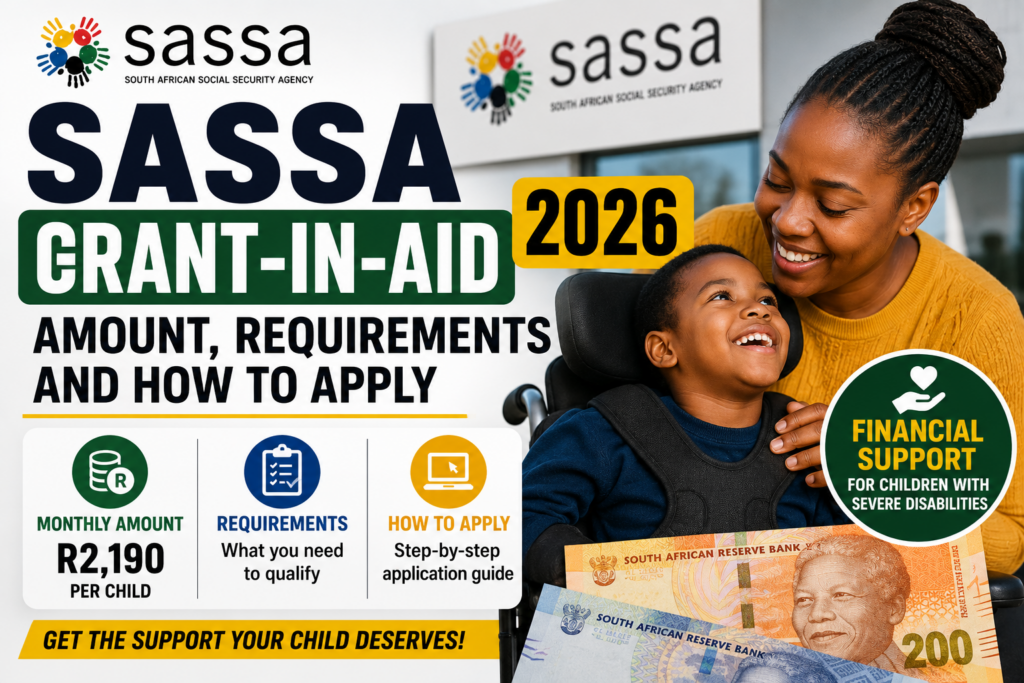
Grant-in-Aid is R580 per month from April 2026 for qualifying recipients of specified primary grants who need regular assistance. The exact outcome of an application or payment issue can still depend on the beneficiary’s individual circumstances, so this article explains the general process while pointing readers back to official channels for account-specific decisions.
Start with the official information
SASSA-related information is frequently copied across social media, WhatsApp groups and third-party websites. Some of it is accurate when first published but becomes outdated after a Budget announcement, regulation change or administrative update. For that reason, the safest approach is to use an article like this to understand the process and then confirm any deadline, amount or account-specific instruction on an official platform.
When dealing with Grant-in-Aid, keep your South African ID information, registered cellphone number and relevant supporting documents available. Do not post these details publicly in a comment section while asking for help.
Who this information is for
This guide is aimed at applicants, beneficiaries and caregivers who need to understand Grant-in-Aid. Not every SASSA programme uses exactly the same rules. A permanent social grant, for example, may involve a means test, supporting documents and periodic reviews, while the SRD programme has its own online application and monthly assessment process.
Before following any step, identify the exact grant and the exact problem you are dealing with. A declined application, a delayed payment, a lost phone number and a cancelled application are different issues and may require different services.
Step-by-step: what to do
- Identify the exact issue. Write down the grant name, relevant month and the status or message you received.
- Check the official service. Use SASSA, the SASSA Services Portal, the official SRD portal or the official government information page.
- Read the current requirements. Do not assume a screenshot from a previous year still applies.
- Prepare your information. Gather identity, contact, financial, medical, caregiving or court documents where relevant.
- Complete the correct process. Apply, update, appeal or respond to a review only through the appropriate channel.
- Keep proof. Save a reference number, receipt, screenshot or confirmation where possible.
- Follow up safely. If the matter remains unresolved, use an official contact channel rather than paying a stranger who promises special access.
Important eligibility and verification considerations
Social assistance is governed by eligibility rules. Depending on the grant, these can include age, residency, citizenship or qualifying status, income and assets, disability, caregiving responsibilities or a valid court order. SRD applications also go through verification processes that can produce different monthly outcomes.
Applicants should provide truthful and consistent information. Trying to bypass verification by creating duplicate applications, using another person’s bank account without understanding the rules or changing personal information to force a different result can create additional problems.
Grant-in-Aid is R580 per month from April 2026 for qualifying recipients of specified primary grants who need regular assistance.
Documents and information you may need
The exact documents depend on the service, but it is sensible to prepare the following where relevant:
- your identity document or accepted identification information;
- the cellphone number linked to the application;
- banking information for an account you can lawfully use;
- proof of income, assets or marital status where a means test applies;
- medical reports or assessments for disability-related grants;
- birth or caregiving documents for child-related grants;
- court orders for legal foster-care cases; and
- any letter, SMS, receipt or reference number connected to the case.
Never hand an original identity document, bank card and PIN to an unknown person who offers to ‘fix’ a grant problem.
Common mistakes that cause unnecessary delays
Many problems around Grant-in-Aid are made worse by simple mistakes. One common mistake is using an unofficial website that looks similar to a government service. Another is entering a phone number that the applicant cannot access, which can make verification difficult.
Other mistakes include ignoring a legitimate review notice, waiting too long to challenge a decision, submitting several duplicate requests for the same issue, entering banking details incorrectly and assuming that one person’s payment experience will be identical to everyone else’s.
Take time to read the status or instruction shown on your own case. If a specific reason is given, address that reason instead of following generic advice that may not apply.
How to protect yourself from scams
Grant beneficiaries are attractive targets for fraud because scammers know that people may be urgently waiting for money. A scammer may promise guaranteed approval, an early payment, a secret bonus or the ability to remove a decline in exchange for a fee.
Be suspicious if someone asks for your bank PIN, online-banking password, card details or a one-time password. A legitimate information website does not need those credentials simply to explain a grant process.
If you believe sensitive banking information has been exposed, contact your bank immediately. If your SASSA application details may have been changed without permission, secure your phone and email accounts and contact the relevant official service.
What to do when the process does not work
If you have followed the correct steps for Grant-in-Aid and the problem remains unresolved, first confirm that enough processing time has passed. Check whether the system shows a new status or whether SASSA requested additional information.
Keep a simple record of dates, reference numbers and documents submitted. This makes it easier to explain the issue when contacting an official support channel. Avoid repeatedly changing correct information simply because the result has not appeared immediately.
For a formal decline, use the applicable review or appeal route. For a technical or access problem, seek official assistance. For suspected fraud, treat the matter as a security issue rather than an ordinary application delay.
Practical checklist
- Confirm that you are dealing with the correct grant and period.
- Check the latest official information about Grant-in-Aid.
- Use contact details that you control.
- Enter personal and banking information carefully.
- Keep copies of important documents and confirmations.
- Respond to legitimate deadlines promptly.
- Use the correct appeal or update process where applicable.
- Never pay for a guaranteed grant approval.
- Never share a banking PIN or password.
- Recheck official information when rules or amounts may have changed.
Frequently asked questions
Where should I start if I am confused about Grant-in-Aid?
Start with the official SASSA or SRD service that applies to your grant. Identify the exact status or problem before making changes.
Can a third party guarantee that SASSA will approve my application?
No. Eligibility decisions are made according to the applicable rules and verification process. Be cautious of anyone selling guaranteed approval.
Should I share my PIN or verification code with someone helping me?
No. Keep banking PINs, passwords and sensitive verification codes private.
What if information online conflicts with this article?
For time-sensitive details, follow the latest official SASSA, Department of Social Development or South African Government information.
Can SASSA rules change after this article is published?
Yes. Payment amounts, dates, thresholds and procedures can change, which is why important decisions should be checked against current official information.
Conclusion and next step
The best next step is to identify your exact situation, use the correct official service and keep proof of every important action you take. This is especially important for Grant-in-Aid, where outdated instructions or a wrong process can waste time. Use this guide as a practical starting point, then verify account-specific and time-sensitive information directly with SASSA.
Official sources and verification
Because grant rules, payment dates and administrative processes can change, readers should verify time-sensitive information before acting. The most useful official starting points are the South African Social Security Agency, the SASSA Services Portal, the official SRD portal and the South African Government social grants information service. SRD appeals should be handled through the official appeal service linked from the SRD platform.