
How Is the Petrol Price Calculated in South Africa? Full Breakdown
How is the petrol price calculated in South Africa? The price motorists pay at the pump starts with the Basic Fuel Price (BFP), which reflects the market-related cost of importing fuel into South Africa. Domestic costs are then added, including transport and distribution costs, wholesale and retail margins, and government levies such as the General Fuel Levy, Road Accident Fund (RAF) Levy and Carbon Fuel Levy. The final price also varies by fuel-pricing zone, which is one reason petrol generally costs more inland than at the coast. (DMRE)
This means South Africa’s petrol price is not determined by the crude-oil price alone. The rand/dollar exchange rate, international refined-product prices, shipping costs, taxes, levies, margins and transport costs can all influence what motorists eventually pay.
This guide breaks down the system in plain English and answers the practical questions South Africans commonly have when the petrol price changes.
Table of Contents
How Is the Petrol Price Calculated in South Africa? Quick Answer
The easiest way to understand the petrol price is to divide it into two broad parts:
| Part of the petrol price | What it includes |
|---|---|
| International component | International petroleum-product prices, exchange rate and costs associated with importing fuel |
| Domestic component | Transport, distribution, margins, taxes, government levies and other regulated components |
The Department of Mineral and Petroleum Resources (DMPR) uses the Basic Fuel Price as the starting point. The BFP is based on an import-parity principle intended to represent the realistic cost of importing refined petroleum products into South Africa. (DMRE)
Domestic components are then added to reach the applicable pump price.
So, in simplified form:
Basic Fuel Price + domestic costs + margins + taxes and levies + applicable adjustments = petrol pump price
The real official calculation is more detailed, but this formula is a useful way for ordinary motorists to understand it.
Who Determines the Petrol Price in South Africa?
South Africa’s regulated fuel-price system is administered through the Department of Mineral and Petroleum Resources.
Petrol prices are adjusted monthly using the prescribed fuel-pricing methodology and movements in international and domestic components.
The Department explains that the BFP is calculated daily. Those daily calculations are compared with the BFP already built into the current fuel-price structure.
At the end of the review period, these movements help determine whether an adjustment is necessary. (DMRE)
This is why motorists often hear terms such as:
- Over-recovery
- Under-recovery
- Basic Fuel Price
- Slate Levy
- Rand/dollar exchange rate
when economists discuss the expected petrol-price adjustment.
What Is the Basic Fuel Price?
The Basic Fuel Price, usually abbreviated to BFP, is one of the most important components of South Africa’s fuel-price calculation.
It is designed to represent what it would realistically cost to import refined petroleum products into South Africa.
The Department says the calculation is linked to petroleum-product prices quoted in US dollars at export-oriented refining centres in areas including:
- The Mediterranean
- The Arab Gulf
- Singapore
(DMRE)
The BFP therefore responds to international market conditions.
That includes more than simply checking today’s Brent crude-oil price.
What Goes Into the Basic Fuel Price?
Several components are involved.
International petroleum-product prices
South Africa’s fuel-pricing model considers international prices for refined petroleum products.
This distinction matters.
Crude oil and petrol are not the same product.
Crude oil must first be refined into products such as petrol and diesel. As a result, changes in crude prices are important, but refined-product market conditions also matter.
The Department’s pricing methodology uses international petroleum-product quotations rather than simply taking the crude-oil price and converting it into rand. (DMRE)
Rand/US dollar exchange rate
International petroleum products are priced in US dollars.
South Africans pay in rand.
The exchange rate therefore plays an important role.
If the rand weakens against the dollar while international fuel prices remain unchanged, imported fuel becomes more expensive in rand terms.
If the rand strengthens, it can provide some relief.
The DMPR identifies the rand/dollar exchange rate as one of the key international influences on domestic fuel prices. (DMRE)
Freight and shipping-related costs
Fuel has to reach South Africa.
The BFP therefore makes provision for costs associated with moving petroleum products internationally.
Cargo dues
South African harbour infrastructure is used when petroleum products are brought into the country.
The BFP includes the applicable cost associated with using harbour facilities to offload products into onshore storage. (SAnews)
Coastal storage
Imported petroleum products need storage and handling facilities.
The BFP includes an allowance for coastal storage.
Stock financing
Holding fuel stocks costs money.
According to the Department’s methodology, stock-financing costs consider the landed value of petroleum products, a specified stockholding period and an interest-rate calculation. (DMRE)
Together, these components help create the BFP.
Why Does the Petrol Price Change Every Month in South Africa?
The simple answer is that many of the inputs used to calculate fuel prices change constantly.
International petroleum prices can rise or fall.
The rand can strengthen or weaken.
Shipping conditions can change.
International supply can be disrupted.
Demand can increase or decrease.
Because these factors move continually, South Africa reviews fuel prices monthly rather than setting one price for the entire year.
The government’s July 2026 fuel-price announcement, for example, showed how changes in international petroleum prices and the rand/dollar exchange rate both contributed to that month’s calculation. (South Africa Government)
That is also why predicting next month’s petrol price several weeks in advance is difficult.
Early estimates can change significantly before the review period closes.
Does the Crude Oil Price Determine South Africa’s Petrol Price?
It influences the price, but it does not determine the entire pump price.
This is an important distinction.
Crude-oil prices influence international petroleum markets, but South Africa’s calculation also considers:
- International refined-product prices
- Rand/dollar exchange rate
- Shipping and import-related costs
- Domestic transportation
- Wholesale and retail margins
- Fuel levies
- RAF levy
- Carbon Fuel Levy
- Slate Levy where applicable
- Other regulated components
(DMRE)
Therefore, crude oil can fall while another component moves in the opposite direction.
For example, a weaker rand can offset some of the benefit of falling international prices.
How Does the Rand/Dollar Exchange Rate Affect Petrol?
Imagine that an internationally traded petroleum product costs the same number of US dollars this month as it did last month.
If the rand becomes weaker against the dollar, South Africa needs more rand to buy the same dollar-priced product.
That puts upward pressure on the BFP.
The opposite can happen when the rand strengthens.
A real example occurred during the July 2026 review period.
The government reported that the rand strengthened on average from R16.52/$ to R16.38/$, contributing to a reduction in the calculated Basic Fuel Prices for petrol, diesel and illuminating paraffin. (South Africa Government)
That demonstrates why watching the oil price alone gives motorists an incomplete picture.
What Taxes and Levies Are Included in South Africa’s Petrol Price?
Once the international component has been calculated, several domestic components contribute to the final pump price.
Among the best-known are:
General Fuel Levy
This is a tax charged on fuel and contributes to general government revenue.
Road Accident Fund Levy
This levy helps fund the Road Accident Fund, which provides compensation within its statutory framework to people affected by road accidents.
Carbon Fuel Levy
This forms part of South Africa’s environmental tax framework.
Customs and Excise Levy
This is another component of the regulated fuel-price structure.
Slate Levy
This can be applied depending on the balance in the Slate Account.
(SAnews)
These components explain why motorists cannot calculate the pump price simply by converting a barrel of crude oil into litres.
What Is the General Fuel Levy in South Africa?
The General Fuel Levy is a tax imposed on fuel.
Unlike the Road Accident Fund Levy, it is not a ring-fenced payment to a specific road-accident compensation fund.
It contributes to general government revenue.
For the 2026 Budget, the Minister of Finance announced increases of:
- 9 cents per litre for petrol
- 8 cents per litre for diesel
The Carbon Fuel Levy increased by:
- 5 cents per litre for petrol
- 6 cents per litre for diesel
The RAF Levy increased by 7 cents per litre for both petrol and diesel. (National Treasury)
These adjustments took effect from 1 April 2026, although temporary fuel-levy relief introduced during 2026 temporarily changed what motorists actually paid under the General Fuel Levy. (South Africa Government)
What Is the RAF Levy?
The Road Accident Fund Levy is charged on fuel and helps finance the Road Accident Fund.
The RAF exists to compensate eligible victims of road accidents according to the applicable legal framework.
From 1 April 2026, the RAF Levy increased by 7 cents per litre, from 218c/l to 225c/l on petrol and diesel. (South African Revenue Service)
That means R2.25 of every litre under the applicable 2026 levy goes to the RAF component.
If you purchase 40 litres:
40 × R2.25 = R90
So R90 of that purchase is attributable to the RAF Levy alone.
That calculation does not include the General Fuel Levy, Carbon Fuel Levy or other petrol-price components.
What Is the Carbon Fuel Levy?
The Carbon Fuel Levy is an environmental component of the fuel-price structure.
From 1 April 2026, the Carbon Fuel Levy was increased to:
- 19 cents per litre for petrol
- 23 cents per litre for diesel
(South African Revenue Service)
The levy forms part of South Africa’s broader carbon-tax framework.
For a 40-litre petrol fill:
40 × R0.19 = R7.60
Again, that is only the Carbon Fuel Levy portion.
How Much Is the General Fuel Levy in 2026?
This requires additional explanation because 2026 was unusual.
The Budget initially increased the full General Fuel Levy rate to:
- R4.10/litre for petrol
- R3.93/litre for diesel
from 1 April 2026. (South African Revenue Service)
However, temporary relief was introduced because of severe international fuel-price pressures.
The government temporarily reduced the effective levy and subsequently phased the relief out.
By 1 July 2026, the short-term relief had been completely phased out. The government reported full fuel levies of 429c/l for petrol and 416c/l for diesel in the July fuel-price structure. (South Africa Government)
This illustrates an important point for News Domain readers:
Never use an old fuel-levy figure without checking its effective date.
Government interventions can temporarily change a component even when the underlying statutory rate has been adjusted.
What Is the Slate Levy?
The Slate Levy is one of the least understood parts of South Africa’s petrol price.
The BFP is calculated daily.
The daily calculated BFP can be higher or lower than the BFP currently included in the regulated fuel-price structure.
If consumers are effectively paying less than the calculated amount, an under-recovery develops.
If consumers are effectively paying more, an over-recovery develops.
These movements feed into what is called the Slate Account.
When the account develops a sufficiently negative balance, a Slate Levy can be imposed to help recover that deficit. (DMRE)
The amount can therefore change substantially.
For example, the Slate Levy was:
157.74c/l in June 2026. (South Africa Government)
It fell to:
113.94c/l in July 2026. (South Africa Government)
And then fell further to:
61.38c/l in August 2026. (South Africa Government)
This is a good example of a petrol-price component that is not permanently fixed at one amount.
What Is an Under-Recovery in the Petrol Price?
An under-recovery means the current regulated fuel price is effectively recovering less than the calculated cost implied by the BFP during the review period.
In simple terms:
Calculated cost > amount currently being recovered
This creates upward pressure on the next adjustment.
An over-recovery is the opposite:
Calculated cost < amount currently being recovered
This creates downward pressure.
The actual monthly adjustment depends on the average movement during the review period and other applicable components. (DMRE)
This is why you might see headlines saying:
“Petrol is showing an over-recovery of 40 cents.”
That does not necessarily mean the final petrol price will definitely fall by exactly 40 cents.
The review period may not be complete, and other components may still change.
Why Is Petrol More Expensive Inland Than at the Coast?
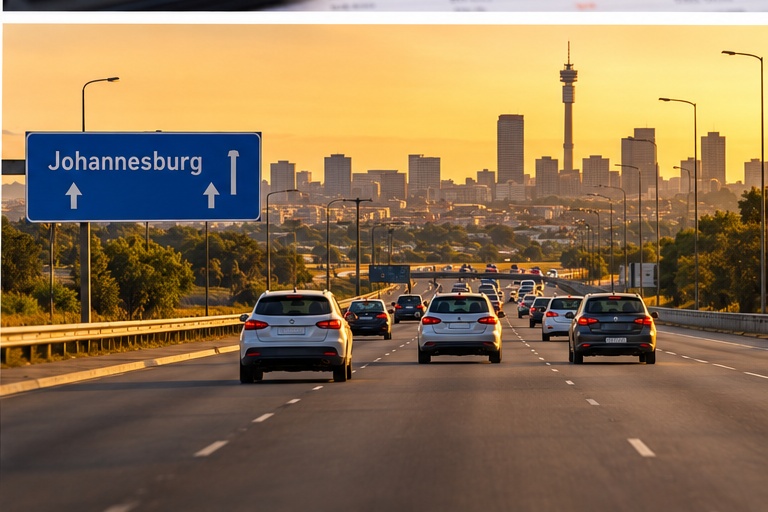
One of the most common questions South African motorists ask is why somebody in Gauteng can pay more for petrol than someone near the coast.
A major reason is transport cost.
Fuel entering or produced near coastal infrastructure must be transported to inland markets.
South Africa’s regulated pricing structure includes transport costs associated with moving petroleum products by methods such as:
- Pipeline
- Rail
- Road
(SAnews)
The country therefore uses fuel-pricing zones, historically referred to through magisterial district pricing zones.
Transport-related differentials contribute to different pump prices across these zones.
In simple terms
A motorist near the coast is closer to key fuel-import and refining infrastructure.
Moving that fuel hundreds of kilometres inland costs money.
Those distribution costs form part of the regulated price structure.
That is why Gauteng’s petrol price is generally higher than coastal prices.
Does Every Petrol Station Charge the Same Price?
For regulated petrol grades, the retail price is regulated according to the applicable pricing zone.
This differs from diesel, where retail pricing operates differently and filling stations can show greater price variation.
For petrol, your location and pricing zone matter.
This is why comparing a Johannesburg petrol price with a Cape Town petrol price without considering the applicable zone can be misleading.
What Is the Petrol Retail Margin?
A service station needs revenue to operate.
The regulated petrol-price structure therefore includes a retail margin.
The Department describes this as being based on costs incurred by service-station operators in selling petrol, including relevant expenses such as:
- Labour
- Rental
- Interest
- Overheads
- Entrepreneurial compensation
(SAnews)
So when you pay for petrol, the entire amount does not go to government or the international oil producer.
Part of the price supports the domestic supply and retail system.
What Is the Wholesale Margin?
A wholesale margin is also incorporated into the fuel-price structure.
It relates to the role of petroleum wholesalers in the supply chain.
The Department uses a regulated methodology when determining the applicable margin. (SAnews)
Again, this shows why the pump price contains several layers between the international fuel market and your vehicle’s tank.
Why Do Petrol Prices Sometimes Fall When Oil Prices Rise?
Because crude oil is only one variable.
Imagine:
- Crude oil becomes slightly more expensive.
- But the rand strengthens significantly.
- International refined petrol prices fall.
- Another domestic component decreases.
The combined effect could still produce a petrol-price reduction.
The reverse can also happen.
Crude oil might become cheaper, but a sharply weaker rand could erase some of the benefit.
That is why statements such as:
“Oil fell, therefore South African petrol must fall”
are incomplete.
You need to consider the combined movement of the BFP inputs and domestic components.
Why Does 93 and 95 Petrol Cost Different Amounts?
South Africa sells different petrol grades, including 93 octane and 95 octane.
The DMPR uses 95 octane unleaded petrol as the price-marker grade when applying the BFP octane differential.
The differential between 95 and 93 is adjusted periodically according to the applicable fuel-pricing rules. (South Africa Government)
That is why the difference between 93 and 95 does not necessarily remain exactly the same forever.
Which one should you use?
Use the fuel grade recommended for your vehicle.
Do not choose a lower octane purely because it is cheaper if your vehicle manufacturer specifies otherwise.
Check your:
- Owner’s manual
- Fuel-filler flap
- Manufacturer specifications
Does South Africa Import Petrol?
South Africa’s fuel-price methodology is explicitly based on an import-parity model.
The Department says the BFP aims to represent the realistic market-related cost of importing a substantial portion of the country’s liquid-fuel requirements. (DMRE)
South Africa can therefore be affected by international supply disruptions even when those events happen thousands of kilometres away.
Global events can influence:
- Crude prices
- Refined-product prices
- Shipping costs
- Insurance costs
- Supply availability
- Exchange rates
This explains why geopolitical events can quickly become relevant to South African motorists.
How Often Does the Petrol Price Change in South Africa?
Fuel prices are generally adjusted monthly.
The government announces the official adjustment before it takes effect.
The monthly process considers international and local factors over the relevant review period. (South Africa Government)
This is why News Domain recommends checking the official government announcement instead of relying on an early prediction circulating on WhatsApp or Facebook.
An estimate is not the final regulated price.
When Does the New Petrol Price Usually Start?
Monthly fuel adjustments generally take effect on the first Wednesday of the month, although official government announcements should always be checked for the exact effective date.
For example:
- April 2026 adjustment — 1 April
- June 2026 adjustment — 3 June
- July 2026 adjustment — 1 July
- August 2026 adjustment — 5 August
Rather than memorising a date, check the official monthly notice.
Who Benefits When the Petrol Price Goes Up?
There is no single answer because the petrol price consists of different components.
An increase caused by international petroleum prices does not mean the South African government receives the entire increase.
Likewise, a tax increase is different from an international BFP increase.
A petrol-price movement could come from:
- International petroleum prices
- Exchange-rate movements
- Taxes
- Levies
- Transport costs
- Margins
- Slate adjustments
The reason for the increase therefore matters.
This is why News Domain recommends reading the government’s monthly reasons for the fuel-price adjustment, rather than only looking at the number of cents per litre.
How Much Do Fuel Levies Add to a 50-Litre Tank?
We can illustrate this using the full levy figures reported by government for July 2026.
For petrol:
General Fuel Levy: R4.29/litre
RAF Levy: R2.25/litre
Carbon Fuel Levy: R0.19/litre
For a hypothetical 50-litre petrol fill:
| Levy | Rate | Amount on 50 litres |
|---|---|---|
| General Fuel Levy | R4.29/l | R214.50 |
| RAF Levy | R2.25/l | R112.50 |
| Carbon Fuel Levy | R0.19/l | R9.50 |
| Combined | R6.73/l | R336.50 |
So those three components alone amount to approximately:
R336.50 on 50 litres.
This calculation excludes other petrol-price components and should not be interpreted as saying R336.50 represents every tax, margin or regulated charge contained in a 50-litre purchase.
It simply demonstrates the three listed levy components.
What Happens When Petrol Goes Up by R1 Per Litre?
The easiest way to understand a petrol-price increase is to multiply the change per litre by the litres you buy.
Suppose petrol increases by:
R1 per litre
Then:
| Fuel purchased | Additional cost |
|---|---|
| 10 litres | R10 |
| 20 litres | R20 |
| 30 litres | R30 |
| 40 litres | R40 |
| 50 litres | R50 |
| 60 litres | R60 |
If the increase is 50 cents per litre, a 50-litre purchase costs:
R0.50 × 50 = R25 more
This is a simple calculation and assumes the same number of litres is purchased.
How Petrol Prices Affect More Than Motorists
Fuel prices have implications beyond the amount you pay when filling your car.
South Africa relies heavily on road transport for moving goods.
Higher fuel costs can increase operating costs for:
- Transport companies
- Delivery businesses
- Farmers
- Retailers
- Taxi operators
- Small businesses
- Logistics companies
ANALYSIS
That does not mean a R1 petrol increase automatically causes every product in a supermarket to rise by a predictable percentage.
Businesses have different cost structures, contracts and abilities to absorb costs.
But sustained increases in transport costs can contribute to broader inflationary pressure.
This is one reason fuel prices matter to South Africans who do not own cars as well.
Can the Government Reduce the Petrol Price?
Government has influence over some domestic components of the fuel price, particularly taxes and levies.
It does not, however, control the international price of petroleum products or the global US-dollar price of crude oil.
It also cannot simply decree a favourable rand/dollar exchange rate.
Government can make policy decisions affecting components such as the General Fuel Levy.
South Africa demonstrated this in 2026 when temporary General Fuel Levy relief was introduced in response to unusually severe international fuel-price pressures and subsequently phased out. (South Africa Government)
This demonstrates both sides of the equation:
Government can change certain domestic components.
But:
Government cannot directly control all international inputs.
How to Check the Official Petrol Price in South Africa
When a new fuel price is announced, use an official source.
The most reliable starting point is the Department of Mineral and Petroleum Resources.
Department of Mineral and Petroleum Resources fuel-price information
You can also use the South African Government news portal, which publishes the Department’s monthly fuel-price announcements.
South African Government news portal
When checking a petrol price, confirm:
- Month
- Effective date
- 93 or 95 octane
- Coastal or inland/your pricing zone
- Whether the figure is the official adjustment or merely a prediction
This prevents a common mistake where motorists share an outdated price from a different month or region.
Common Myths About South Africa’s Petrol Price
Myth 1: Government keeps all the money from petrol
False.
The petrol price includes international fuel costs, transport, distribution, margins, taxes and levies.
Myth 2: Petrol should immediately fall whenever oil falls
Not necessarily.
The rand/dollar exchange rate and international refined-product prices also influence the BFP.
Myth 3: Petrol costs the same everywhere in South Africa
False.
Fuel-pricing zones and transport costs contribute to geographic price differences.
Myth 4: The RAF Levy pays for road construction
False.
The RAF Levy funds the Road Accident Fund, which deals with compensation arising from road accidents under the applicable legal framework.
Myth 5: Every predicted petrol-price change becomes official
False.
Mid-month or early-month estimates can change before the official adjustment is announced.
Myth 6: The government chooses a random petrol price each month
False.
South Africa uses a defined fuel-pricing methodology built around the BFP and regulated domestic components. (DMRE)
Frequently Asked Questions About How the Petrol Price Is Calculated in South Africa
How is the petrol price calculated in South Africa?
The calculation starts with the Basic Fuel Price, which represents the market-related cost of importing refined fuel. Domestic transport costs, margins, taxes, levies and other regulated components are then added to determine the applicable pump price. (DMRE)
Who sets the petrol price in South Africa?
The regulated fuel-price system is administered by the Department of Mineral and Petroleum Resources using the prescribed fuel-pricing methodology.
What determines whether petrol goes up or down?
Important factors include international petroleum-product prices, crude-oil market conditions, the rand/dollar exchange rate and changes in domestic fuel-price components. (DMRE)
Why does the rand affect petrol prices?
International petroleum products are priced in US dollars. A weaker rand means more rand is generally required to purchase the same dollar-priced product.
Why is petrol more expensive in Gauteng?
Transporting petroleum products inland creates additional transport costs. These costs are incorporated into South Africa’s fuel-pricing zones. (SAnews)
What is the Basic Fuel Price?
The BFP is an import-parity benchmark designed to represent the realistic market-related cost of importing refined petroleum products into South Africa. (DMRE)
What is the General Fuel Levy?
It is a tax charged per litre of fuel and contributes to general government revenue.
What is the RAF Levy?
It is a levy on fuel that helps finance the Road Accident Fund.
How much is the RAF Levy in 2026?
From 1 April 2026, the RAF Levy is R2.25 per litre on petrol and diesel. (South African Revenue Service)
What is an over-recovery?
An over-recovery occurs when the calculated BFP during the review period is lower than the BFP currently incorporated into the fuel-price structure. It can contribute to downward pressure on the next adjustment. (DMRE)
What is an under-recovery?
An under-recovery occurs when the calculated BFP is higher than the amount currently reflected in the fuel-price structure, creating upward pressure.
Why does petrol change every month?
Because international petroleum prices, exchange rates and other relevant inputs change continually. The pricing mechanism reviews these movements over the monthly calculation period.
Is 95 petrol always more expensive than 93?
The two grades have an octane differential that is periodically adjusted under the BFP rules, so motorists should check the current official prices for their pricing zone. (South Africa Government)
Where can I find the latest official petrol price?
Check the Department of Mineral and Petroleum Resources or the South African Government’s official monthly fuel-price announcement.
What South African Motorists Should Remember
Understanding how the petrol price is calculated in South Africa becomes much easier when you stop thinking of the pump price as one number.
It is a collection of components.
The Basic Fuel Price reflects international market and import-related costs.
Then South Africa adds domestic components such as:
- Transport
- Distribution
- Wholesale margin
- Retail margin
- General Fuel Levy
- RAF Levy
- Carbon Fuel Levy
- Applicable Slate Levy
- Other regulated components
The international side is strongly affected by global petroleum prices and the rand/dollar exchange rate, while government policy influences several domestic components. (DMRE)
That is why petrol can rise even when one factor improves—and why early predictions are never as reliable as the final official announcement.
For motorists, the most practical habit is simple:
Check the official monthly adjustment, make sure you’re looking at the correct petrol grade and pricing zone, and look at the reasons behind the change rather than only the headline number.
Sources & References
This article was researched primarily from official South African sources, including the Department of Mineral and Petroleum Resources’ fuel-price methodology, South African Government fuel-price announcements, SARS fuel-levy information and the 2026 National Budget. (DMRE)
FACT: Figures for the 2026 General Fuel Levy, RAF Levy, Carbon Fuel Levy and Slate Levy are drawn from official government material applicable to the dates stated.
ANALYSIS: News Domain’s examples showing the cost of levies on 40- or 50-litre purchases are mathematical illustrations calculated from those official rates.
OPINION: This article does not argue for or against South Africa’s regulated fuel-pricing system. Its purpose is to explain how the system works.
Rank Math SEO Information — Article 10
PRIMARY KEYWORD:how is the petrol price calculated in South Africa
SEO TITLE:
How Is the Petrol Price Calculated in South Africa?
META DESCRIPTION:
How is the petrol price calculated in South Africa? Learn how the BFP, rand, oil prices, fuel levy, RAF levy and transport costs affect petrol prices.
PERMALINK:/how-is-petrol-price-calculated-south-africa/
CATEGORY:
Government & Economy
SECONDARY KEYWORDS:
- petrol price calculation South Africa
- Basic Fuel Price South Africa
- what determines petrol price in South Africa
- fuel levy South Africa
- RAF levy South Africa
- why petrol price changes South Africa
- why petrol is expensive in South Africa
- petrol price components South Africa
- how fuel prices work in South Africa
- why petrol is more expensive inland
- South Africa fuel price explained
TAGS:
Petrol Prices, Fuel Prices, Basic Fuel Price, Fuel Levy, RAF Levy, Cost of Living, South African Economy, DMPR
INTERNAL LINK 1
Link to Article 9 using a natural anchor such as:
South Africa electricity price increase 2026
This gives you a relevant internal connection between two household cost-of-living explainers.
INTERNAL LINK 2
Link to Article 8 using:
Johannesburg water and sanitation tariff increase 2026
This helps create a useful News Domain content cluster around South African household costs and regulated prices.
Use the actual WordPress URLs for Articles 8 and 9 rather than inventing URLs.
EXTERNAL SOURCE
Department of Mineral and Petroleum Resources — Fuel Price Structure
FEATURED IMAGE ALT TEXT
How is the petrol price calculated in South Africa
Rank Math 80+ Check
- Search intent answered in the first sentence
- Exact focus keyword in first paragraph
- Exact focus keyword in H1
- Exact focus keyword in H2
- Focus keyword used naturally in body
- Focus keyword in FAQ
- Focus keyword in conclusion
- Focus keyword in SEO title
- Focus keyword in meta description
- Keyword terms in permalink
- Exact keyword prepared for featured-image ALT
- Related questions answered
- Authoritative government sources used
- Internal links identified
- External link included
- Tables included
- Original calculations and explanations included
- Short, mobile-friendly paragraphs
- No keyword stuffing
- No copied news reporting
Originality note: This article was written from scratch for News Domain. Official sources were used to verify the underlying facts, but the structure, explanations, examples, tables and wording are original rather than copied or spun from another publisher. I would still recommend running your final WordPress version through your preferred plagiarism checker before publishing, because no writing system can truthfully guarantee a specific third-party plagiarism score.