
South Africa Electricity Price Increase 2026: How Much Did Electricity Go Up?
The South Africa electricity price increase 2026 is 8.76% on average for customers supplied directly by Eskom, effective from 1 April 2026. For municipal bulk electricity purchases from Eskom, the average adjustment is 9.01% from 1 July 2026. However, this does not mean every South African household’s electricity bill or prepaid purchase increased by exactly 8.76% or 9.01%. Your actual cost depends on who supplies your electricity, your tariff category, consumption and any fixed or network charges that apply. (Eskom)
This guide explains the South Africa electricity price increase 2026 in plain English, including when it started, how Eskom and municipal customers differ, what it means for prepaid users, why your units may differ when buying the same rand amount, and how qualifying households can access Free Basic Electricity.
Table of Contents
South Africa Electricity Price Increase 2026: Quick Answer
| Question | Answer |
|---|---|
| Eskom direct-customer average increase | 8.76% |
| Effective date for Eskom direct customers | 1 April 2026 |
| Municipal bulk tariff adjustment | 9.01% average |
| Municipal effective date | 1 July 2026 |
| Do all households pay exactly 8.76% more? | No |
| Do municipalities necessarily charge residents exactly 9.01% more? | No |
| Is Free Basic Electricity available? | Yes, for qualifying indigent households |
| Standard FBE allocation | 50 kWh per household per month for qualifying grid-connected households |
Eskom confirms that its 2026/27 residential tariffs—including Homelight 20A, Homelight 60A, Homepower and Homeflex—received the 8.76% overall adjustment for directly supplied customers. (Eskom)
When Did the South Africa Electricity Price Increase 2026 Start?
There are two dates readers need to understand.
For customers who buy electricity directly from Eskom, the 2026/27 tariffs took effect on:
1 April 2026
For municipal bulk electricity purchases, the adjustment applies from:
1 July 2026
Eskom explains that the difference exists because municipalities implement tariff changes at the start of their financial year under the Municipal Finance Management Act framework. (Eskom)
This means two households in South Africa can experience electricity-price changes at different times depending on their electricity supplier.
How Much Did Eskom Electricity Increase in 2026?
NERSA approved an average 8.76% electricity price increase for customers supplied directly by Eskom for the 2026/27 financial year.
The adjustment applies across several Eskom tariff categories, including residential tariffs. (Eskom)
Eskom direct customers
| Customer | 2026/27 adjustment | Effective |
|---|---|---|
| Eskom direct customers | 8.76% average | 1 April 2026 |
| Eskom residential tariffs | 8.76% | 1 April 2026 |
| Municipal bulk tariffs | 9.01% average | 1 July 2026 |
There is an important word in that table:
Average.
It is misleading to tell every household:
Your electricity bill increased by exactly 8.76%.
The tariff structure matters.
Eskom’s 2026/27 changes also include adjustments to how certain fixed, capacity, service and administration costs are recovered. (Eskom)
Are You an Eskom Customer or a Municipal Customer?
This is the first thing you need to establish before trying to calculate your electricity increase.
South African households can receive electricity:
- Directly from Eskom
- Through a municipality
- Through an authorised reseller or another billing arrangement in certain properties
If your electricity account or prepaid supply is directly with Eskom, Eskom’s residential tariff applies according to your tariff category.
If your electricity is supplied by a municipality, you need to check your municipality’s approved retail electricity tariff.
Eskom itself distinguishes between tariffs for end-customers it supplies directly and tariffs for municipalities purchasing electricity in bulk. (Eskom)
This distinction is one of the most important things to understand about the 2026 increase.
Does the 9.01% Municipal Increase Mean My Municipal Electricity Went Up 9.01%?
Not necessarily.
The 9.01% figure relates to the average adjustment in Eskom’s local-authority/municipal tariffs from 1 July 2026. (Eskom)
Municipalities purchase electricity from Eskom and establish their own retail tariff structures through their budget and tariff processes, subject to the applicable regulatory framework.
That means you should not automatically calculate:
Last year’s municipal electricity price × 1.0901
and assume that is your new household tariff.
Your municipality may have different:
- Consumption blocks
- Basic charges
- Capacity charges
- Prepaid tariffs
- Conventional tariffs
- Indigent tariffs
- Time-of-use tariffs
- Fixed monthly charges
If you live in Johannesburg, Tshwane, Ekurhuleni, eThekwini, Cape Town or another municipality, check the tariff published by that municipality for 2026/27.
Why Does R100 Electricity Buy Fewer Units?
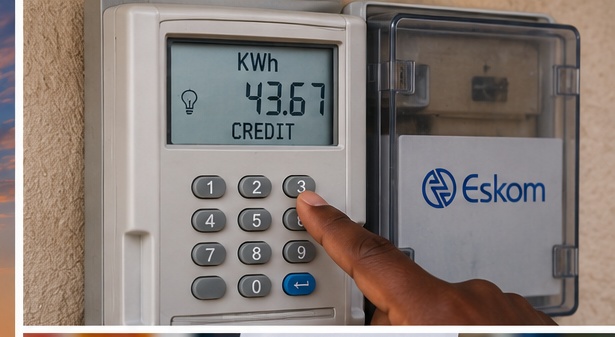
This is one of the most practical questions prepaid customers ask after an electricity tariff increase.
Suppose you normally buy:
R100 of prepaid electricity.
If the applicable price per kilowatt-hour increases, the same R100 generally buys fewer units, assuming everything else remains equal.
Here’s a simplified example.
Illustrative example only
Assume electricity previously cost:
R2.50/kWh
Then:
R100 ÷ R2.50 = 40 kWh
If the price increased to:
R2.75/kWh
then:
R100 ÷ R2.75 ≈ 36.36 kWh
So your R100 would buy fewer units.
This example is not an official Eskom or municipal tariff calculation. It simply demonstrates how a higher unit price affects a fixed-rand prepaid purchase.
Your actual purchase depends on your tariff and applicable charges.
Why Can’t I Just Add 8.76% to My Previous Electricity Cost?
Because electricity tariffs can contain more than one component.
Eskom has been restructuring tariffs to make different electricity costs more visible.
For example, Eskom says Homepower tariffs were unbundled into separate:
- Energy charges
- Network charges
- Retail/service-related charges
The old inclining block structure was also removed from Eskom’s residential tariffs in the previous tariff restructuring. Homelight moved to a single c/kWh energy rate rather than charging a higher energy rate after a particular consumption threshold. (Eskom)
For 2026/27, Eskom says structural adjustments continue.
For applicable tariffs, the Generation Capacity Charge was increased to a further stage of the planned tariff restructuring. Homepower and Homeflex also saw a greater portion of service and administration costs shifted into fixed charges, with corresponding energy-rate adjustments intended to keep the overall annual adjustment aligned with the approved average increase. (Eskom)
That is why looking only at one percentage does not always tell you exactly how an individual account changes.
What Changed for Eskom Residential Electricity Tariffs?
Eskom currently groups residential customers under tariff categories including:
- Homelight 20A
- Homelight 60A
- Homepower
- Homeflex
Homeflex is relevant to residential customers with grid-connected rooftop solar generation. (Eskom)
For 2026/27, Eskom lists an 8.76% adjustment for these residential categories. (Eskom)
But the individual components can change differently because of tariff restructuring.
Homepower and Homeflex fixed charges
Eskom says the fixed portion of the service and administration charge for Homepower and Homeflex increased to 66.66% of the originally proposed FY2025 Retail Tariff Plan rand-value, compared with 33.33% previously.
Eskom says corresponding energy rates were reduced so that the overall annual increase remained aligned with the approved average increase. (Eskom)
What does that mean in plain English?
A household should not judge its electricity costs only by looking at the per-kWh energy price.
Depending on the tariff, part of the cost can be recovered through fixed or network-related charges.
This is particularly important when comparing two tariff plans.
Do Prepaid Electricity Customers Pay the Increase?
Yes, prepaid customers are also subject to the applicable electricity tariff.
Having a prepaid meter does not protect a customer from tariff increases.
The difference is mainly in how you pay.
With prepaid electricity, you pay before consuming the electricity.
With a conventional meter, electricity consumption is recorded and billed according to the applicable billing arrangement.
Your prepaid token should indicate the amount purchased and units credited.
If the tariff changes, the number of units obtained for a given rand amount can change.
Does Buying Electricity at the Beginning of the Month Give You More Units?
This question requires more nuance than many social-media posts suggest.
For Eskom’s current Homelight tariffs, the previous inclining block tariff was removed. Eskom says Homelight customers now pay a single c/kWh rate regardless of how many times electricity is purchased during a month. (Eskom)
Therefore, advice claiming that every Eskom prepaid customer must buy all their electricity at the beginning of the month to avoid moving into a higher Eskom Homelight block is outdated.
However, municipal tariff structures can differ.
If you buy prepaid electricity from a municipality, check that municipality’s current tariff instead of assuming Eskom’s tariff structure applies.
This is a good example of why electricity advice on social media can be misleading when it treats every South African household as though they have the same supplier and tariff.
How Can I Find My Electricity Tariff?
Start with your electricity supplier.
If Eskom supplies you directly
Check your:
- Eskom account
- Prepaid meter/supply information
- Tariff category
- Eskom tariff documentation
Eskom publishes its current tariffs and charges on its official Distribution website. (Eskom)
Check Eskom’s official 2026/27 tariff information
If your municipality supplies you
Go to your municipality’s official website and look for:
2026/27 electricity tariffs
or:
2026/27 tariff schedule
Do not use another municipality’s tariff to estimate your bill.
Why Did Electricity Prices Increase in 2026?
Electricity tariff decisions involve the revenue Eskom is allowed to recover and the costs associated with generating, transmitting, distributing and servicing electricity customers.
Eskom says the 2026/27 tariff adjustment follows NERSA’s regulatory decisions and forms part of the current electricity pricing framework. (Eskom)
Tariff structures are also being changed so that different types of costs are recovered more explicitly.
This includes:
- Energy
- Network use
- Generation capacity
- Service and administration
FACT
The approved average increase for Eskom direct customers is 8.76%.
ANALYSIS
A tariff increase can affect households differently because electricity consumption and tariff structures differ.
A household with low electricity usage and one with high usage should not automatically expect the same rand increase.
Likewise, a municipal customer and an Eskom direct customer cannot necessarily compare prepaid purchases rand-for-rand.
How Much More Could Electricity Cost You?
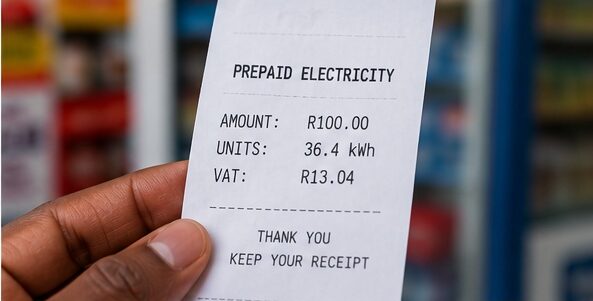
Rather than pretending one calculation applies to everyone, we can demonstrate the effect of an 8.76% increase on a hypothetical total electricity cost, assuming that entire cost rose by exactly that percentage.
This is for illustration only.
| Previous electricity cost | 8.76% illustrative increase | Illustrative new cost |
|---|---|---|
| R300 | R26.28 | R326.28 |
| R500 | R43.80 | R543.80 |
| R750 | R65.70 | R815.70 |
| R1,000 | R87.60 | R1,087.60 |
| R1,500 | R131.40 | R1,631.40 |
| R2,000 | R175.20 | R2,175.20 |
Important: These are mathematical examples, not predictions of actual Eskom bills.
Because tariff components and customer circumstances vary, your real increase may not match this table.
The table is useful only for understanding what an 8.76% increase looks like in rand terms.
Does South Africa Still Have Free Basic Electricity in 2026?
Yes.
Free Basic Electricity is intended to provide qualifying poor households with a basic electricity allocation.
The South African government’s current public-service guidance states that qualifying indigent households connected to the grid can receive:
50 kWh of Free Basic Electricity per household per month. (Government of South Africa)
However, there is an important qualification:
You do not automatically receive Free Basic Electricity simply because you use little electricity.
You generally need to qualify under your municipality’s indigent-support rules.
Municipalities determine eligibility according to their own criteria and means-testing arrangements. (Government of South Africa)
Who Qualifies for Free Basic Electricity?
The government’s guidance says Free Basic Services are intended for indigent households.
Municipalities determine their own criteria for deciding who qualifies for indigent status. (Government of South Africa)
That means the income threshold or application requirements can differ from one municipality to another.
You may need to provide information such as:
- Identity documents
- Proof of residence
- Household-income information
- Electricity account or meter details
- Other documentation required by your municipality
Do not assume the criteria in Johannesburg are identical to those in Cape Town, Ekurhuleni, Tshwane or eThekwini.
INTERNAL LINK OPPORTUNITY:
How to Apply for Free Basic Electricity in South Africa
This would be a strong follow-up News Domain article because readers searching for electricity-price increases are likely to want practical information about available assistance.
How Does Free Basic Electricity Work With a Prepaid Meter?
For qualifying prepaid customers, the Free Basic Electricity allocation is provided through the applicable municipal or electricity-distribution arrangement.
Government guidance states that qualifying grid-connected indigent households can receive 50 kWh per month. Once that free allocation has been used, the household must purchase additional electricity. (Government of South Africa)
Do not buy a supposed “FBE token” from an unofficial person.
Contact your municipality or electricity supplier if you believe you qualify but are not receiving your allocation.
Is Free Basic Electricity Available to Everyone?
No.
This is one of the biggest misconceptions about Free Basic Electricity.
It is aimed at qualifying indigent households.
Stats SA explains that municipalities have their own criteria for determining indigent status, largely based on available resources and municipal policies. (Statistics South Africa)
Therefore:
Low electricity consumption ≠ automatic FBE qualification
and:
Having a prepaid meter ≠ automatic FBE qualification.
You need to check your municipality’s rules.
How to Reduce the Impact of Higher Electricity Prices
Households cannot control the national tariff decision, but they can reduce unnecessary consumption.
1. Switch off your geyser strategically
Electric water heating can represent a significant household load.
Avoid keeping hot water heated unnecessarily if your household’s routine allows more efficient scheduling.
Be sensible about hygiene and hot-water needs rather than simply switching equipment off for excessively long periods.
2. Reduce unnecessary heating
Electric heaters can consume substantial power when used for long periods.
Try to retain heat indoors before relying entirely on electrical heating.
3. Use energy-efficient lighting
LED bulbs generally use substantially less electricity than older incandescent lighting for equivalent useful illumination.
4. Turn appliances off when they are not needed
Small standby loads add up across many devices.
Focus particularly on equipment that does not need to remain powered continuously.
5. Use the washing machine efficiently
Where practical, run full loads rather than several small loads.
6. Monitor your prepaid purchases
Record:
- Date
- Rand amount
- Units received
Doing this can help you understand whether your usage is rising or the price per unit has changed.
7. Check for faulty appliances
An appliance that operates inefficiently can increase consumption.
8. Understand your tariff
This may be more useful than blindly trying to reduce every appliance’s usage.
If your tariff includes fixed charges, lowering consumption does not necessarily remove those fixed costs.
Why Did My Electricity Bill Increase More Than Expected?
There are several possible reasons.
Your consumption increased
Compare kWh, not only rand amounts.
If you consumed more electricity, your bill can rise even without a tariff change.
The tariff changed
The 2026/27 tariff increase affects electricity costs according to your applicable tariff.
Fixed charges changed
Some tariff structures include fixed, network or service charges.
Your municipality changed its tariff structure
Municipal tariffs do not necessarily mirror Eskom direct-customer tariffs.
Your billing period is different
A longer billing period can create an apparently larger monthly bill.
Estimated readings were corrected
Conventional-meter customers can sometimes see adjustments when estimated consumption is replaced with actual readings.
If the increase appears unreasonable, inspect the individual components rather than assuming it is entirely caused by the national tariff adjustment.
What If You Think Your Prepaid Electricity Units Are Wrong?
Start by keeping the token receipt.
Check:
- Amount paid.
- Units received.
- Meter number.
- Supplier.
- Tariff shown where available.
- VAT or other components reflected.
- Date of purchase.
Then compare the transaction with previous purchases.
Do not rely solely on:
“I always got more units for R500.”
Your consumption tariff may have changed.
If the numbers still appear incorrect, contact the electricity supplier or municipality.
Avoid posting your full meter number, token numbers or personal account information publicly on social media when asking for help.
Are Electricity Tariffs the Same Across South Africa?
No.
This is crucial.
South Africa does not have one identical retail household electricity tariff for everyone.
A household can be supplied by:
- Eskom
- City of Johannesburg
- City of Tshwane
- City of Cape Town
- eThekwini Municipality
- Ekurhuleni
- Another municipality
- An authorised reseller in some properties
Even households consuming the same number of kilowatt-hours can pay different amounts depending on their supplier and tariff.
That is why News Domain is not publishing a misleading table claiming:
“R500 buys exactly X units everywhere in South Africa.”
There is no single nationwide answer.
What Is a Kilowatt-Hour?
Electricity tariffs are commonly expressed using kilowatt-hours (kWh).
A kilowatt-hour is a unit of energy.
For example, in simplified terms:
A 1,000-watt appliance running for one hour uses approximately:
1 kWh
A 2,000-watt appliance running for one hour uses approximately:
2 kWh
This helps explain why high-power appliances used for long periods can consume significant electricity.
Your prepaid meter displays units representing electricity available for consumption.
Can Solar Help Reduce Electricity Costs?
Solar can reduce the amount of electricity a household needs to purchase from the grid, but it is not automatically the cheapest option for every household.
The economics depend on:
- Electricity consumption
- Solar-system cost
- Financing cost
- Roof suitability
- Battery requirements
- Maintenance
- Local rules
- Tariff structure
Eskom says residential customers with grid-tied rooftop solar generation are required to use the Homeflex tariff. (Eskom)
Therefore, anyone considering rooftop solar should investigate the applicable registration, tariff and technical requirements rather than simply installing a system based on a social-media advertisement.
What Is Eskom’s Easy Electricity Option?
Eskom says it plans to introduce Easy Electricity purchase options for households.
These are not new tariffs.
Instead, Eskom describes them as simplified purchase options based on average monthly usage for existing residential tariff categories.
The purpose is to make prepaid electricity purchasing easier to understand. Eskom also says prepaid tokens purchased under these arrangements do not expire. (Eskom)
Residents should wait for official Eskom implementation information rather than assuming an unofficial electricity product is part of this programme.
Common Electricity Price Myths in 2026
Myth 1: Everyone’s electricity increased by 8.76%
False.
8.76% is the average adjustment for Eskom direct customers.
Municipal retail tariffs vary.
Myth 2: Municipal electricity increased exactly 9.01%
Misleading.
9.01% is the average Eskom municipal bulk tariff adjustment. Your municipality’s retail tariff needs to be checked separately. (Eskom)
Myth 3: Everyone gets 50 free units
False.
Free Basic Electricity is intended for qualifying indigent households. (Government of South Africa)
Myth 4: All prepaid customers pay the same price
False.
Tariffs depend on supplier and tariff category.
Myth 5: Eskom Homelight still charges more after 350 kWh
Outdated.
Eskom removed the old Homelight inclining block structure and moved Homelight customers to a single c/kWh energy rate. (Eskom)
Frequently Asked Questions About the South Africa Electricity Price Increase 2026
How much did electricity increase in South Africa in 2026?
The approved average increase for customers supplied directly by Eskom is 8.76% for 2026/27, effective from 1 April 2026. Eskom’s municipal bulk tariff adjustment averages 9.01% from 1 July 2026. (Eskom)
When did the Eskom increase start?
The 2026/27 Eskom direct-customer tariffs became effective on 1 April 2026. (Eskom)
When did municipal electricity increase?
Eskom’s municipal bulk tariff adjustment took effect from 1 July 2026. Individual municipalities establish their applicable retail tariffs through their own processes. (Eskom)
Did prepaid electricity increase in 2026?
Yes. Prepaid customers are subject to the applicable 2026/27 electricity tariffs. The exact effect depends on whether you are supplied by Eskom or a municipality and which tariff applies.
Why am I getting fewer electricity units for the same amount?
A higher applicable electricity price can mean a fixed rand purchase buys fewer kilowatt-hours. However, you should check your specific tariff and any other applicable charges before assuming the difference is solely due to the 2026 increase.
Does R100 buy the same number of units everywhere?
No. Retail electricity tariffs vary by supplier and tariff category.
Does everyone get 50 kWh of free electricity?
No. The standard Free Basic Electricity allocation is intended for qualifying indigent households. Government guidance identifies 50 kWh per household per month for qualifying grid-connected households. (Government of South Africa)
How do I apply for Free Basic Electricity?
Contact your municipality and ask about its indigent register or Free Basic Services programme. Municipalities determine their own qualifying criteria. (Government of South Africa)
Are Eskom and municipal electricity prices the same?
No. Eskom has tariffs for customers it supplies directly and separate bulk tariffs for municipalities. Municipalities establish their own retail tariffs. (Eskom)
Is buying electricity at the start of the month cheaper?
For current Eskom Homelight customers, the old inclining block structure has been removed and Homelight uses a single c/kWh energy rate. Municipal tariff structures can differ, so municipal customers need to check their local tariff. (Eskom)
What South African Households Should Do Now
The South Africa electricity price increase 2026 means Eskom direct customers are subject to an average 8.76% increase from 1 April 2026, while Eskom’s municipal bulk electricity tariffs increased by an average 9.01% from 1 July 2026. (Eskom)
But don’t stop at those percentages.
To understand what you are paying:
- Identify whether Eskom or your municipality supplies you.
- Find your exact tariff category.
- Check the official 2026/27 tariff.
- Compare your kWh consumption with previous months.
- Check fixed and network charges where applicable.
- Keep prepaid purchase receipts.
- Investigate Free Basic Electricity if your household may qualify.
- Query unexplained billing differences with your supplier.
The most important takeaway is that there is no single retail electricity price that applies to every household in South Africa.
Sources & References
The primary sources used for this guide include Eskom’s official 2026/27 tariff information and South African government guidance on Free Basic Electricity.
Eskom 2026/27 electricity tariff information
South African Government Free Basic Services guide
Fact, analysis and opinion note
FACT: The 8.76% Eskom direct-customer increase, 9.01% municipal bulk adjustment and implementation dates are based on official Eskom information. (Eskom)
ANALYSIS: Household examples and explanations of how higher prices affect fixed-rand prepaid purchases are News Domain calculations intended to make the official tariff information easier to understand.
OPINION: News Domain does not take a position in this guide on whether the approved tariff increase is justified.