
Johannesburg Water and Sanitation Tariff Increase 2026: What Residents Will Pay
The Johannesburg water and sanitation tariff increase 2026 took effect on 1 July 2026, with the City of Johannesburg approving an average 12.5% increase for water and 11% for sanitation for the 2026/27 financial year. The increases mean many Johannesburg households will pay more for both the water they consume and sanitation services, although the exact impact depends on factors including water usage, meter type, property size and whether a household qualifies for indigent support. (City of Johannesburg)
This guide explains the new Johannesburg water and sanitation tariffs, how the charges work, what the increases can mean for a household bill, and what residents should check if their municipal account rises.
Quick answer: Johannesburg’s approved 2026/27 average increases are 12.5% for water and 11% for sanitation, effective from 1 July 2026. These are not necessarily a flat 12.5% or 11% increase on every resident’s total municipal bill. Your actual bill depends on the tariffs and services applicable to your property. (City of Johannesburg)
Table of Contents
Johannesburg Water and Sanitation Tariff Increase 2026 at a Glance
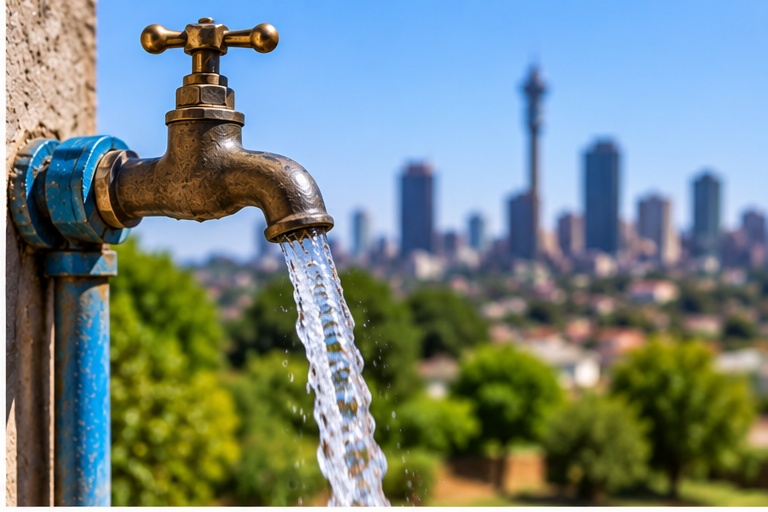
The City approved its R97.1 billion 2026/27 budget on 28 May 2026. The new tariffs became effective on 1 July. (City of Johannesburg)
| Municipal service | Approved average 2026/27 increase |
|---|---|
| Water | 12.5% |
| Sanitation | 11% |
| Electricity | 8.63% |
| Refuse | 6.2% |
| Property rates | 3.6% |
The figures above are the City’s approved average tariff increases. They should not be interpreted as meaning every Johannesburg household’s total municipal account increases by exactly those percentages. (City of Johannesburg)
The City publishes the approved tariffs on its official tariff portal.
City of Johannesburg 2026/27 tariffs
When Did the Johannesburg Water Tariff Increase Start?
The new tariffs came into effect on 1 July 2026, at the beginning of the City’s 2026/27 financial year.
The City confirmed the approved increases in June after Council adopted the 2026/27 budget on 28 May 2026. (City of Johannesburg)
For residents, this means municipal consumption and charges falling under the new tariff period should be calculated according to the applicable 2026/27 tariff structure.
If you are comparing bills, make sure you compare the correct billing periods. A bill covering consumption from before the new financial year may not provide a straightforward comparison with a later bill.
How Much Did Johannesburg Water Increase in 2026?
The City’s approved average water tariff increase is 12.5% for 2026/27. (City of Johannesburg)
But Johannesburg uses a block tariff structure for residential water.
That means the price per kilolitre can change as household consumption moves into higher usage bands.
For conventional residential water meters, the City’s final 2026/27 budget lists the following tariffs:
| Monthly consumption band | 2025/26 | 2026/27 |
|---|---|---|
| 0–6 kL | — | — |
| Above 6–10 kL | R29.84/kL | R33.57/kL |
| Above 10–15 kL | R31.15/kL | R35.04/kL |
| Above 15–20 kL | R43.67/kL | R49.13/kL |
| Above 20–30 kL | R60.36/kL | R67.91/kL |
| Above 30–40 kL | R66.01/kL | R74.26/kL |
| Above 40–50 kL | R83.28/kL | R93.69/kL |
| Above 50 kL | R89.24/kL | R100.40/kL |
These published figures exclude the applicable demand management levy and VAT. (City of Johannesburg)
That last point matters when estimating a real municipal account.
The amount in the tariff table should not automatically be treated as the final all-inclusive amount that will appear on every customer’s bill.
How Johannesburg’s Block Water Tariffs Work
A block tariff is designed so that different portions of consumption fall into different pricing bands.
In other words, you should not necessarily take your entire monthly water consumption and multiply it by the rate in the highest band you reach.
Simple example
Suppose a household uses more than 10 kL of water during a billing period.
The relevant portions of consumption are treated according to the applicable tariff bands rather than automatically pricing every kilolitre at the highest reached rate.
This makes understanding the tariff table important when trying to calculate why a municipal account changed.
It also means two households with different consumption levels can experience different rand increases even though both are subject to the same approved tariff structure.
What About Prepaid Water Customers?
Johannesburg’s final budget also lists a separate residential tariff structure for prepayment water meters.
For example, the final budget lists these 2026/27 prepaid rates:
| Monthly consumption band | 2025/26 | 2026/27 |
|---|---|---|
| 0–6 kL | — | — |
| Above 6–10 kL | R25.70/kL | R28.91/kL |
| Above 10–15 kL | R26.52/kL | R29.84/kL |
| Above 15–20 kL | R31.69/kL | R35.65/kL |
| Above 20–30 kL | R57.36/kL | R64.53/kL |
| Above 30–40 kL | R61.75/kL | R69.45/kL |
| Above 40–50 kL | R77.16/kL | R86.81/kL |
| Above 50 kL | R84.38/kL | R94.92/kL |
Again, the City’s budget notes that these prices exclude the demand management levy and VAT. (City of Johannesburg)
Therefore, conventional-meter and prepaid customers should not assume they have identical water tariff structures.
How Much Did Johannesburg Sanitation Increase in 2026?
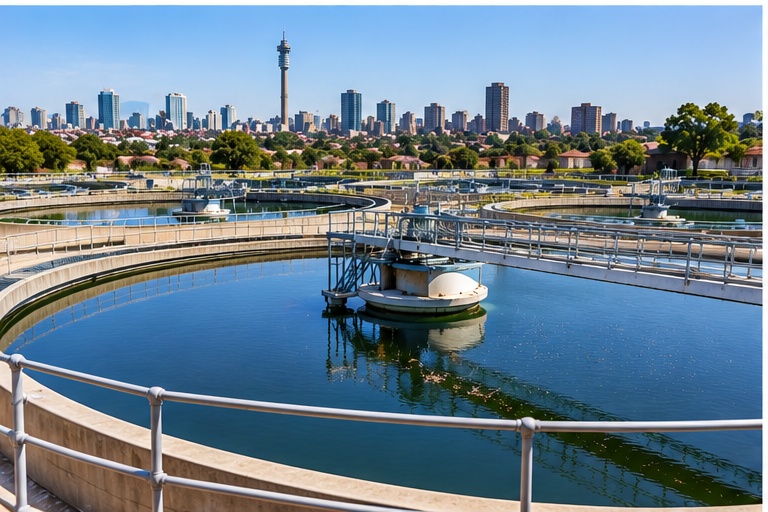
The approved average sanitation increase is 11% for the 2026/27 financial year. (City of Johannesburg)
For private residential properties, sanitation charges can depend on the erf size.
The City’s 2026/27 budget provides the following monthly private-dwelling domestic sanitation tariffs:
| Erf size | 2025/26 monthly tariff | 2026/27 monthly tariff |
|---|---|---|
| Up to and including 300 m² | R358.42 | R397.85 |
| Above 300 m² up to 1,000 m² | R697.73 | R774.48 |
| Above 1,000 m² up to 2,000 m² | R1,055.51 | R1,171.62 |
| Above 2,000 m² | R1,520.83 | R1,688.12 |
The City’s tariff information states that these sanitation prices exclude VAT. (City of Johannesburg)
This is important because sanitation is not simply a charge based on how many litres of water you personally believe you used.
For a private dwelling under this tariff category, the applicable property-size band can materially affect the monthly sanitation charge.
How Much More Could a Household Pay for Sanitation?
The official figures allow us to calculate the difference in the listed base sanitation tariff between 2025/26 and 2026/27.
| Erf size | Old tariff | New tariff | Base increase per month |
|---|---|---|---|
| Up to 300 m² | R358.42 | R397.85 | R39.43 |
| >300–1,000 m² | R697.73 | R774.48 | R76.75 |
| >1,000–2,000 m² | R1,055.51 | R1,171.62 | R116.11 |
| Above 2,000 m² | R1,520.83 | R1,688.12 | R167.29 |
These differences are simple calculations from the City’s published base tariffs and do not include VAT or other charges that may apply to an individual account. (City of Johannesburg)
Example: Property of 250 m²
A qualifying private dwelling in the up-to-300 m² category moves from:
R358.42 → R397.85
Difference:
R39.43 per month before VAT
Over 12 months, if the same base charge applied each month:
R39.43 × 12 = R473.16
That is a calculation based on the published tariff difference, not a prediction of the household’s complete municipal bill.
Example: Property of 700 m²
The applicable base tariff moves from:
R697.73 → R774.48
Difference:
R76.75 per month before VAT
Annualised:
R76.75 × 12 = R921.00
Again, this isolates the published sanitation tariff difference. It does not account for changes in water consumption, electricity, refuse, rates or other municipal charges.
Why Could Your Total Johannesburg Municipal Bill Rise by More Than 12.5%?
This is where residents should be careful with headlines.
A 12.5% average water tariff increase does not mean your entire municipal account rises by 12.5%.
A City of Johannesburg account can include several separate charges.
Depending on the property and services, these can include:
- Water
- Sanitation
- Electricity
- Refuse
- Property rates
- Applicable fixed or service-related charges
- VAT where applicable
The City’s approved 2026/27 changes differ between these categories. Water increased by an average 12.5%, sanitation by 11%, electricity by 8.63%, refuse by 6.2%, and property rates by 3.6%. (City of Johannesburg)
Your bill can also change because of your actual consumption.
For example, if your water usage rises at the same time that tariffs increase, the rand increase on the account could be greater than what you expected from looking at the tariff percentage alone.
What Is the Water Demand Management Levy?
The water consumption tariff is not necessarily the only water-related charge residents need to understand.
The City’s tariff structure also provides for a water demand management levy.
The City has described this as a fixed charge associated with a water connection that helps cover network and base-installation costs, regardless of actual consumption. (City of Johannesburg)
The final 2026/27 tariff tables specifically note that the listed residential consumption prices exclude the demand management levy and VAT. (City of Johannesburg)
This is one reason residents should avoid estimating their entire water bill by multiplying their kilolitres by a single tariff number.
Your account can contain more than the consumption component.
Does Johannesburg Still Provide Free Basic Water?
The City’s 2026/27 budget includes free-water provisions for qualifying indigent households through the Expanded Social Package.
The published framework includes monthly free-water allocation caps according to the City’s poverty-index bands.
The 2026/27 budget lists:
| Indigent category | Monthly free-water allocation cap |
|---|---|
| Band 1 | Not applicable under the listed allocation |
| Band 2 | 10 kL |
| Band 3 | 12 kL |
| Band 4 | 15 kL |
The allocation is limited to actual consumption where a household uses less than its allocated cap. (City of Johannesburg)
This support is not the same thing as saying every Johannesburg household automatically receives 6 kL, 10 kL or 15 kL of free water.
Eligibility and the City’s Expanded Social Package rules matter.
What Is Johannesburg’s Expanded Social Package?
The Expanded Social Package is one of the City’s mechanisms for supporting vulnerable residents.
When approving the 2026/27 budget, the City said vulnerable residents would continue to receive protection through measures including free basic services, pensioner rebates and the Expanded Social Package. (City of Johannesburg)
Residents struggling to afford municipal services should therefore investigate whether they meet the City’s current eligibility requirements rather than simply stopping payment.
INTERNAL LINK OPPORTUNITY:
How to Apply for the City of Johannesburg Expanded Social Package
That would make a useful follow-up article for News Domain because it directly answers the next question lower-income readers may have after learning about tariff increases.
Why Did Johannesburg Increase Water and Sanitation Tariffs?
The City says tariff adjustments are necessary to maintain services and infrastructure.
In its May 2026 public information, Johannesburg said the tariff changes were intended to help sustain service delivery, maintain essential infrastructure and meet growing demand for municipal services.
The City adopted a R97.1 billion budget for 2026/27, including R8.8 billion for infrastructure investment, asset renewal and service-delivery improvement programmes. (City of Johannesburg)
The budget identifies investment areas including:
- Water and sanitation infrastructure
- Reduction of non-revenue water
- Electricity infrastructure
- Roads and stormwater infrastructure
- Public transport
- Inner-city rejuvenation
- Township renewal
- Safety and urban management
FACT
The approved average increases are 12.5% for water and 11% for sanitation.
ANALYSIS
For households already under financial pressure, even a tariff increase intended to fund infrastructure can create an affordability challenge because municipal charges compete with food, transport, housing and other household expenses.
That interpretation should not be confused with the City’s official justification for the tariffs.
How to Check Whether Your Johannesburg Water Bill Is Correct
A higher bill after 1 July does not automatically mean the account is incorrect.
But residents should still check it carefully.
Step 1: Compare the billing periods
Look at the dates covered by the old and new bills.
Make sure you are comparing equivalent periods.
Step 2: Check the meter reading
Determine whether the bill is based on:
- An actual reading
- An estimated reading
- Another billing adjustment
A consumption increase can make the bill rise independently of the tariff change.
Step 3: Compare your kilolitres used
Don’t compare only the rand amount.
Compare actual consumption.
If you used substantially more water, part of the increase may come from consumption rather than the tariff adjustment.
Step 4: Identify your tariff category
Check whether you have:
- A conventional meter
- A prepaid meter
- Another applicable customer classification
The City’s published tariff tables distinguish between different customer categories. (City of Johannesburg)
Step 5: Check your sanitation category
If you are billed under the private-dwelling domestic sanitation tariff, check the erf-size category being used.
Step 6: Look for other municipal increases
Your total account may also reflect the 2026/27 electricity, refuse and property-rate changes.
Step 7: Query unexplained differences
If the numbers still do not make sense, raise the matter through official City channels rather than ignoring the account.
Water Consumption Matters More Under a Rising Block Tariff
The block tariff structure means reducing consumption can help in two ways.
First, you consume fewer kilolitres.
Second, reducing usage may prevent some consumption from moving into more expensive bands.
For conventional residential meters, the City’s published 2026/27 rates move from R33.57/kL in the above-6-to-10-kL band to R100.40/kL in the above-50-kL band, excluding the demand management levy and VAT. (City of Johannesburg)
That does not mean all consumption is charged at R100.40 once a household exceeds 50 kL; the block structure applies different rates to applicable portions of consumption.
But it demonstrates why high consumption can become expensive.
Practical Ways to Reduce Household Water Consumption
Residents cannot control municipal tariff decisions, but they can control some household consumption.
Practical steps include:
Fix leaking taps
A tap that continuously drips wastes water without providing any benefit.
Check toilets for leaks
A toilet can leak into the bowl without being immediately obvious.
Monitor unusual meter movement
If your meter continues moving when no water is intentionally being used, investigate whether there could be a leak.
Take shorter showers
Reducing shower time can lower household consumption, particularly in larger households.
Run full loads
Where practical, use washing machines and dishwashers with full loads instead of several small loads.
Avoid unnecessary hose use
Use water efficiently when washing vehicles or cleaning outdoor areas.
Track monthly consumption
Don’t wait for a surprisingly high account before checking usage.
Recording your meter periodically can help you identify unusual changes earlier.
These steps do not change the municipal tariff, but they can reduce the amount of water that passes through the meter.
Could Water Restriction Tariffs Apply?
The City’s 2026/27 budget makes provision for water restriction tariffs.
It states that if Johannesburg Water imposes water restrictions, a water-restriction tariff can apply according to the relevant tariff rules. (City of Johannesburg)
This does not mean News Domain is saying a water-restriction tariff currently applies to every resident.
It means the approved tariff framework provides for such tariffs if the relevant restrictions are imposed.
Residents should check official Johannesburg Water and City communications during restriction periods rather than relying on old social-media posts.
What If You Rent a Property in Johannesburg?
Tenants should check their lease and billing arrangement.
Depending on the property, water may be:
- Billed directly
- Included in rent
- Recovered by a landlord or managing agent
- Allocated through a sub-meter
- Divided according to another agreed arrangement
The City’s tariff increase does not determine how every private landlord structures tenant billing.
If your landlord or managing agent tells you that your water charge increased because of municipal tariffs, request a clear breakdown if the amount is unclear.
The municipal tariff and the private billing arrangement are separate issues.
What About Apartment and Sectional-Title Residents?
Apartment complexes can have billing arrangements that differ from a standalone residential property.
For example, the municipality may bill a bulk supply point while a body corporate, managing agent or metering provider allocates consumption internally.
Residents should therefore avoid assuming that the standalone private-dwelling example in this article exactly reproduces their account.
Ask:
- How is the complex metered?
- Who receives the municipal account?
- How is individual usage calculated?
- Are there common-property water charges?
- What fixed charges are being allocated?
- Which municipal tariff category applies?
Understanding the billing chain can help identify whether an increase comes from the City tariff, higher consumption or the way charges are allocated within the complex.
Are Johannesburg Water Tariffs the Same as Other Municipalities?
No.
Johannesburg’s tariffs apply to customers under the City’s applicable tariff structure.
Residents in Tshwane, Ekurhuleni, Cape Town, eThekwini or another municipality should check their own municipality’s approved tariffs.
South African municipalities adopt their own budgets and tariff structures under the applicable local-government framework.
A Johannesburg tariff should therefore not be used to calculate a Pretoria or Cape Town household’s water account.
Why the Percentage Increase Is Not Enough to Calculate Your New Bill
Suppose someone sees:
Water increased 12.5%.
They might take last month’s total municipal bill and multiply the entire amount by 1.125.
That is not a reliable way to calculate the new bill.
Why?
Because:
- Only the water tariff has the 12.5% average increase.
- Sanitation has a different increase.
- Electricity has a different increase.
- Refuse has a different increase.
- Property rates have a different increase.
- Water consumption can change.
- Block tariffs apply.
- Fixed charges may apply.
- VAT treatment can differ between charges.
A better approach is to compare each line item separately.
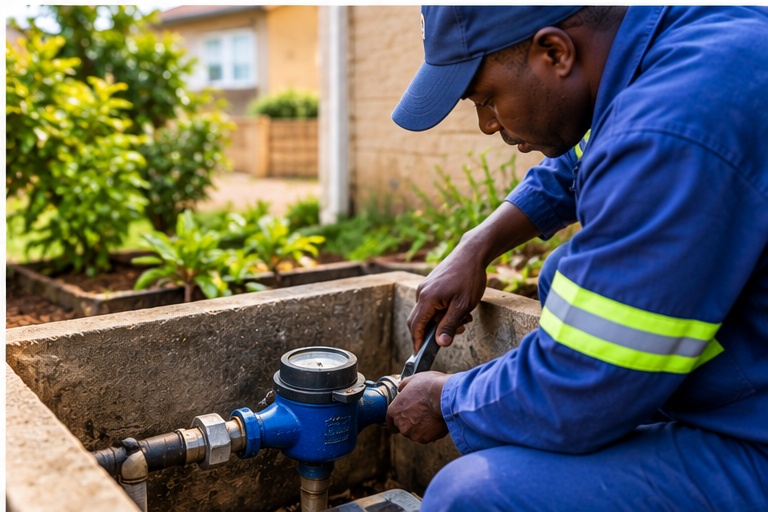
How to Compare Your Old and New Johannesburg Municipal Bills
Create a simple table like this:
| Charge | Previous bill | Current bill | Difference |
|---|---|---|---|
| Water consumption | R___ | R___ | R___ |
| Water-related fixed charges | R___ | R___ | R___ |
| Sanitation | R___ | R___ | R___ |
| Electricity | R___ | R___ | R___ |
| Refuse | R___ | R___ | R___ |
| Property rates | R___ | R___ | R___ |
| Other | R___ | R___ | R___ |
Then check whether the increase is concentrated in one particular line.
This is more useful than looking only at the final amount due.
Frequently Asked Questions About the Johannesburg Water and Sanitation Tariff Increase 2026
How much did Johannesburg water increase in 2026?
The City approved an average water tariff increase of 12.5% for the 2026/27 financial year. The new tariffs took effect on 1 July 2026. (City of Johannesburg)
How much did Johannesburg sanitation increase in 2026?
The approved average sanitation tariff increase is 11% for 2026/27. (City of Johannesburg)
When did the new Johannesburg tariffs start?
The approved 2026/27 tariffs became effective on 1 July 2026. (City of Johannesburg)
Does water cost the same per kilolitre regardless of usage?
No. Johannesburg uses consumption bands for residential water. Higher portions of monthly consumption can fall into higher-priced blocks. (City of Johannesburg)
How much is water between 6 and 10 kL in Johannesburg?
For a conventional residential meter, the published 2026/27 tariff for consumption above 6 kL up to 10 kL is R33.57 per kilolitre, excluding the demand management levy and VAT. (City of Johannesburg)
What is the Johannesburg sanitation charge for a property under 300 m²?
The published 2026/27 private-dwelling domestic sanitation tariff for an erf up to and including 300 m² is R397.85 per month, excluding VAT. (City of Johannesburg)
What is the sanitation charge for an erf between 300 m² and 1,000 m²?
The published 2026/27 tariff for a private dwelling larger than 300 m² and up to 1,000 m² is R774.48 per month, excluding VAT. (City of Johannesburg)
Does every Johannesburg household receive free water?
No. The City’s 2026/27 budget provides free-water allocations for qualifying indigent households through the Expanded Social Package according to applicable poverty-index categories. (City of Johannesburg)
Why is my water bill higher than 12.5%?
The 12.5% figure is the approved average water tariff increase, not a guarantee that your individual water bill increases by exactly 12.5%. Consumption, tariff blocks, fixed charges and other factors can affect the amount.
Did electricity also increase?
Yes. The City’s approved average electricity tariff increase for 2026/27 is 8.63%. (City of Johannesburg)
Where can I check the official Johannesburg tariffs?
The City publishes approved tariffs on its official website.
Check the City of Johannesburg’s official tariffs
What Johannesburg Residents Should Do Now
The Johannesburg water and sanitation tariff increase 2026 means residents should expect the new 2026/27 tariff structure to affect accounts from the new financial year.
The key figures are:
Water: average increase of 12.5%
Sanitation: average increase of 11%
Effective date: 1 July 2026 (City of Johannesburg)
But those percentages alone do not tell you exactly how much your account should be.
Check your:
- Water consumption.
- Meter readings.
- Water tariff band.
- Meter/customer category.
- Sanitation tariff.
- Erf size where relevant.
- Fixed charges.
- Other municipal line items.
- Eligibility for municipal support if you are struggling financially.
If your bill rises unexpectedly, compare the individual line items rather than assuming the entire difference comes from the water tariff increase.
Sources & References
The main source for this article is the City of Johannesburg, including its approved 2026/27 tariff information, final Medium-Term Budget and official announcement explaining the tariff changes. The City confirms the 12.5% average water increase, 11% sanitation increase and the 1 July 2026 effective date. (City of Johannesburg)
Official City of Johannesburg 2026/27 Water Tariffs
Fact, analysis and opinion note
FACT: The tariff percentages, effective date and tariff figures in this article are based on official City of Johannesburg documents.
ANALYSIS: Calculations showing the rand difference between the 2025/26 and 2026/27 sanitation tariffs were calculated from the City’s published figures. Household examples are explanatory and do not represent an individual resident’s actual municipal account.
OPINION: This article does not take a position on whether the tariff increases are justified. It explains what the approved tariffs mean for residents.